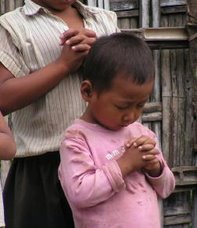
In the third article of a special series from inside Burma, the BBC's Kate McGeown looks at the military government's record of caring for the health and education of its citizens.
Burma's hospitals and schools are secretive places.
Much of what goes on inside these tightly controlled buildings remains a mystery to the outside world.
But indications from the few people prepared to risk speaking out paint a disturbing picture.
One doctor described long queues of patients, many with the classic diseases of poverty such as TB, malaria and water-borne illnesses.
She said she was often unable to give people the treatment they needed, because the drugs were either too expensive or impossible to obtain.
"I get upset sometimes, but then I'm also used to it - every day's the same," she said.
Burma's military junta has been ruling the country for four decades, during which time many other South East Asian nations have seen dramatic improvements in their economies, government services and standards of living.
But many analysts believe that since it came to power, the Burmese government has done little to improve basic services, preferring to spend money on the military and expensive projects like building a new capital.
The World Health Organization estimates that Burma spends $10 per person per year on healthcare, compared with its neighbours Thailand and Malaysia, which spend $160 and $218 respectively.
One NGO estimated that the actual Burmese figure was even lower - more like $0.50.
The results of such policies are obvious. An estimated 150,000 Burmese children under the age of five die every year of malaria, acute respiratory infections and diarrhoea.
"There is no question that the government is not caring adequately for its people," one aid worker said.
Fight against HIV
Not all the news is bad, though. In the past few years, the authorities have increased their co-operation with local and foreign NGOs to tackle the spread of HIV/Aids - and according to UNAids, there have been some concrete results.
Condom use has tripled since 1999, needle exchange programmes are far more prevalent than a few years ago, and more people are both seeking and obtaining treatment.
But Burma still has one of the most serious HIV/Aids epidemics in South East Asia. UNAids estimates that 360,000 Burmese people are currently living with the disease - and other organisations put the figure as high as 600,000.
Despite these successes, there is evidently a long way to go in raising awareness, judging from one man who was brave enough to talk to me about his experiences.
Not only did he risk the wrath of the authorities - like everyone else I spoke to - he also risked exposing himself to the discrimination that comes from having a disease which is still seen as a taboo subject.
"There is a lot of discrimination," he admitted. "I used to share a flat with a friend, but when he found out I had HIV, he made me leave.
"Another man I know used to own a business, but when people found out, no one would buy anything from him anymore."
The man I spoke to is somewhat unusual, in that he is being given free anti-retroviral drugs - a rare luxury in Burma.
"I am one of the lucky ones," he admitted, adding that many Burmese died of Aids without ever knowing there was an alternative.
Education and propaganda
If little is known about healthcare, even less is known about Burma's schooling system.
Because of past student uprisings, the government sees schools and universities as potential hotbeds of dissent, and is therefore especially vigilant at keeping them free from prying eyes.
In fact, according to most of the teachers who were prepared to speak, the government seems to put more energy into stopping outsiders getting into schools than it does on educating the children inside them.
"I have about 80 children in my class," said one woman. "I have to shout so everyone can hear.
Much of a teacher's time is taken up with fulfilling government requests.
"I spent a lot of time being involved in government propaganda," said a woman who left the teaching profession last year in frustration.
"I kept being told to take the children outside to wait for hours at a time, so they could wave flags when important people came past."
The result is that many children leave school without an adequate education.
There are glimmers of hope, though, for even the poorest students.
A few charitable schools operate around the country. One in Mandalay provides free education to nearly 6,000 children.
Passing tourists are welcome to visit, and foreign volunteers are actively sought to help teach English.
It is a refreshing change from the majority of Burmese schools, where the doors remain firmly shut - not only to outsiders, but also to the hopes of Burmese children who want to improve their lives.
Wednesday, August 22


In the second article of a special series from inside Burma, the BBC's Kate McGeown looks at the day-to-day problems facing ordinary people under the country's repressive military regime.
"I hate my life here. I'm just surviving one day at a time," a Burmese taxi driver said sadly, as he stopped to pay a bribe at yet another roadside checkpoint.
"Everything's so difficult. Prices keep going up, and there's too little fuel and electricity.
"There are so many restrictions on everything I want to do... and so much corruption," he said, handing some money to a surly teenager.
For most people in Burma, life under the military government is far from easy.
A farm worker told me he was lucky if he earned 1,000 kyats ($0.80) a day. Some days he earns half that. "I have enough to buy some poor-quality rice for my family, but not much else," he said.
What angers many people is that Burma has plentiful natural resources and was once one of the richest countries in South East Asia, before decades of military rule stifled the economy.
The situation has got far worse in recent months, because of a government decision to increase the salaries of state employees, in some cases by more than 10 times.
"Everyone knew the government couldn't afford it," said a Burmese journalist.
The result was predictable - locals estimate that prices have gone up by more than 30% since April, making it harder for ordinary people to make ends meet.
Andrew Kirkwood, the director of Save the Children in Burma, said malnutrition was a "serious problem", with half the children under five in some areas of Burma thought to be chronically malnourished.
"In some parts of the country, the situation is as bad as we've seen in sub-Saharan Africa," he said.
A man from the western state of Rakhaing said he had even heard reports of farmers selling their babies to child traffickers in exchange for food.
Two-tier system
But the problems that the Burmese face go much deeper than just a lack of money. There is a huge disparity between those allied to the ruling elite and the rest of the population - a distinction which permeates every aspect of day-to-day life.
For many goods, there is a two-tier pricing system. If you know someone influential, you can buy at the government price.
If not, you have to resort to the black market, which is at least twice as expensive.
One of the hottest properties at the moment is a telephone. The black market price is about $3,000 - way beyond most people's means.
Petrol is another commodity where the black market reigns supreme. An ordinary citizen is only allowed two gallons (nine litres) per day at the government price - and even then, queuing can sometimes take hours.
But there always seems to be plenty of petrol at the many black market stands throughout the country. "We're being robbed," one man said.
This climate of semi-official corruption has become so entrenched that whole swathes of the population earn their living from it.
To send a letter, you need to find a friendly "agent" who will make sure it is not pocketed by a postal worker. If you want to avoid paying constant traffic fines, or your child to do well at school, it is vital to know the right people and pay the right price.
Strange decrees
Burma's military rulers make their presence felt in other ways, too. Permission needs to be sought for almost every aspect of life.
"Everything I do is restricted," one man said. "Where I go, what I do, who I see... The authorities even have to give permission if I want anyone to stay the night."
The media, too, is heavily censored. "You only see two colours on TV - orange (for the Buddhist religion) and green (for the military)," said a former television employee.
The government is also unpredictable, and many people fall foul of policies that seem to change at whim.
"One minute farmers are told to grow potatoes to export to India," said a local NGO worker. "The next minute the authorities won't allow it, and all that investment has been wasted."
The latest government campaign is an initiative to grow nut trees, not only as a source of bio fuel but also because government fortune-tellers believe they will shore up the military's power.
Other government decisions, though, are far more sinister. Groups such as the International Labour Organization claim that the Burmese junta continues to use forced labour for its often ambitious construction projects.
Sometimes villagers are even thought to be co-opted as "porters" by the military, many being maimed or killed by landmines as they are made to trek through conflict areas ahead of the soldiers.
Despite living under one of the most draconian regimes in the world, some Burmese people still manage to find time for life's pleasures.
I spoke to a man in his early 20s who, over the last few months, has been using the rare moments of electricity to charge batteries so he can watch the World Cup.
I can imagine him now, glued to a television screen, escaping for a few precious hours from the chaos around him.
"I hate my life here. I'm just surviving one day at a time," a Burmese taxi driver said sadly, as he stopped to pay a bribe at yet another roadside checkpoint.
"Everything's so difficult. Prices keep going up, and there's too little fuel and electricity.
"There are so many restrictions on everything I want to do... and so much corruption," he said, handing some money to a surly teenager.
For most people in Burma, life under the military government is far from easy.
A farm worker told me he was lucky if he earned 1,000 kyats ($0.80) a day. Some days he earns half that. "I have enough to buy some poor-quality rice for my family, but not much else," he said.
What angers many people is that Burma has plentiful natural resources and was once one of the richest countries in South East Asia, before decades of military rule stifled the economy.
The situation has got far worse in recent months, because of a government decision to increase the salaries of state employees, in some cases by more than 10 times.
"Everyone knew the government couldn't afford it," said a Burmese journalist.
The result was predictable - locals estimate that prices have gone up by more than 30% since April, making it harder for ordinary people to make ends meet.
Andrew Kirkwood, the director of Save the Children in Burma, said malnutrition was a "serious problem", with half the children under five in some areas of Burma thought to be chronically malnourished.
"In some parts of the country, the situation is as bad as we've seen in sub-Saharan Africa," he said.
A man from the western state of Rakhaing said he had even heard reports of farmers selling their babies to child traffickers in exchange for food.
Two-tier system
But the problems that the Burmese face go much deeper than just a lack of money. There is a huge disparity between those allied to the ruling elite and the rest of the population - a distinction which permeates every aspect of day-to-day life.
For many goods, there is a two-tier pricing system. If you know someone influential, you can buy at the government price.
If not, you have to resort to the black market, which is at least twice as expensive.
One of the hottest properties at the moment is a telephone. The black market price is about $3,000 - way beyond most people's means.
Petrol is another commodity where the black market reigns supreme. An ordinary citizen is only allowed two gallons (nine litres) per day at the government price - and even then, queuing can sometimes take hours.
But there always seems to be plenty of petrol at the many black market stands throughout the country. "We're being robbed," one man said.
This climate of semi-official corruption has become so entrenched that whole swathes of the population earn their living from it.
To send a letter, you need to find a friendly "agent" who will make sure it is not pocketed by a postal worker. If you want to avoid paying constant traffic fines, or your child to do well at school, it is vital to know the right people and pay the right price.
Strange decrees
Burma's military rulers make their presence felt in other ways, too. Permission needs to be sought for almost every aspect of life.
"Everything I do is restricted," one man said. "Where I go, what I do, who I see... The authorities even have to give permission if I want anyone to stay the night."
The media, too, is heavily censored. "You only see two colours on TV - orange (for the Buddhist religion) and green (for the military)," said a former television employee.
The government is also unpredictable, and many people fall foul of policies that seem to change at whim.
"One minute farmers are told to grow potatoes to export to India," said a local NGO worker. "The next minute the authorities won't allow it, and all that investment has been wasted."
The latest government campaign is an initiative to grow nut trees, not only as a source of bio fuel but also because government fortune-tellers believe they will shore up the military's power.
Other government decisions, though, are far more sinister. Groups such as the International Labour Organization claim that the Burmese junta continues to use forced labour for its often ambitious construction projects.
Sometimes villagers are even thought to be co-opted as "porters" by the military, many being maimed or killed by landmines as they are made to trek through conflict areas ahead of the soldiers.
Despite living under one of the most draconian regimes in the world, some Burmese people still manage to find time for life's pleasures.
I spoke to a man in his early 20s who, over the last few months, has been using the rare moments of electricity to charge batteries so he can watch the World Cup.
I can imagine him now, glued to a television screen, escaping for a few precious hours from the chaos around him.
The BBC's Kate McGeown has just returned from Burma, where she talked to people about life under its repressive military regime. In the first of a series of articles, she gives her impressions of a nation the international community seems at a loss to know what to do with.
As I stepped down from the plane onto Burmese soil, my head full of warnings about spies watching my every move, I was pleasantly surprised to find friendly faces rushing to greet me.
"Thank you so much for coming," said an elderly man, smiling through betel-stained teeth.
Where was the Orwellian nightmare I had been warned about? Where were the police ready to cart me off to jail because they had found out I was a journalist?
The sun was shining, the people were open and friendly... it seemed like any other Asian country. I found it hard not to wonder what all the fuss was about.
But it did not take long to find evidence of Burma's darker side.
Barely 20 minutes along the main highway from the airport, I saw a road leading off to the right that was completely shut off by heavily-armed police.
The tight security was not surprising, given that the road led to the home of opposition leader Aung San Suu Kyi, whose term of house arrest had been extended just days before my arrival.
Local people never mention Ms Suu Kyi by name - they just call her The Lady, a term of deference towards a woman whom many Burmese, probably the vast majority, believe is the rightful leader of their nation.
Despite spending more than 10 of the last 17 years as a prisoner, she remains the main symbol of resistance against the military regime that has ruled Burma for four decades, and which often uses fear and intimidation to keep people in line.
Gossip
Against this backdrop, Burma's 50 million citizens carry on with their daily lives as best they can.
Down the road from Aung San Suu Kyi's house, the people of Rangoon queue for the city's crowded buses, huddle in shops with working generators during the frequent power cuts or play their own version of the Thai national lottery.
Then they do what all Burmese do, and stop in one of the many teashops to gossip about the weather and the football.
But that does not mean that their anger at the military regime has disappeared. If you talk to someone about their life, any veneer of contentment will usually evaporate.
One day, as we drove past a peaceful rural scene of villagers ploughing paddy fields with their oxen, I asked my taxi driver for his views on the political situation.
He had been singing a song to himself, but his face suddenly turned red and angry, and he said: "I hate the people who rule this country. My hatred of the government knows no bounds."
In fact he got so upset that we had to stop the car so he could calm down.
Another man became equally animated when I asked him about the secret military informants who lurk around ever corner.
"They're like a virus - a disease ripping this country apart," he said. "They are everywhere, and they see everything we do.
"So many of my friends have been caught and jailed over the years - some for doing hardly anything. So many lives have been ruined."
Speaking out
It is hardly surprising that emotions run so high.
I was only in Burma for a short time, but I quickly found out how uncomfortable it is to be under surveillance - albeit by a somewhat amateur spy.
On my first day, a man walked into the lobby of my hotel and pretended to read a newspaper near where I was sitting.
He did not turn the page for 20 minutes, but the real giveaway was that the paper - a week-old copy of The Straits Times - was upside-down.
Despite the obvious personal risks of talking to a foreigner, many Burmese people were still willing to put aside their fears and share their lives with me.
They told me about their healthcare system, their schools, their views on the government and the extraordinary decision to move the country's capital to what was, until a few years ago, a rural backwater.
One day a tour guide showing me round one of the Burma's many pagodas turned to me and whispered: "Please let other people know what it's like for us here. We need the outside world to understand."
In this series of articles, I will do my best to answer his request.
As I stepped down from the plane onto Burmese soil, my head full of warnings about spies watching my every move, I was pleasantly surprised to find friendly faces rushing to greet me.
"Thank you so much for coming," said an elderly man, smiling through betel-stained teeth.
Where was the Orwellian nightmare I had been warned about? Where were the police ready to cart me off to jail because they had found out I was a journalist?
The sun was shining, the people were open and friendly... it seemed like any other Asian country. I found it hard not to wonder what all the fuss was about.
But it did not take long to find evidence of Burma's darker side.
Barely 20 minutes along the main highway from the airport, I saw a road leading off to the right that was completely shut off by heavily-armed police.
The tight security was not surprising, given that the road led to the home of opposition leader Aung San Suu Kyi, whose term of house arrest had been extended just days before my arrival.
Local people never mention Ms Suu Kyi by name - they just call her The Lady, a term of deference towards a woman whom many Burmese, probably the vast majority, believe is the rightful leader of their nation.
Despite spending more than 10 of the last 17 years as a prisoner, she remains the main symbol of resistance against the military regime that has ruled Burma for four decades, and which often uses fear and intimidation to keep people in line.
Gossip
Against this backdrop, Burma's 50 million citizens carry on with their daily lives as best they can.
Down the road from Aung San Suu Kyi's house, the people of Rangoon queue for the city's crowded buses, huddle in shops with working generators during the frequent power cuts or play their own version of the Thai national lottery.
Then they do what all Burmese do, and stop in one of the many teashops to gossip about the weather and the football.
But that does not mean that their anger at the military regime has disappeared. If you talk to someone about their life, any veneer of contentment will usually evaporate.
One day, as we drove past a peaceful rural scene of villagers ploughing paddy fields with their oxen, I asked my taxi driver for his views on the political situation.
He had been singing a song to himself, but his face suddenly turned red and angry, and he said: "I hate the people who rule this country. My hatred of the government knows no bounds."
In fact he got so upset that we had to stop the car so he could calm down.
Another man became equally animated when I asked him about the secret military informants who lurk around ever corner.
"They're like a virus - a disease ripping this country apart," he said. "They are everywhere, and they see everything we do.
"So many of my friends have been caught and jailed over the years - some for doing hardly anything. So many lives have been ruined."
Speaking out
It is hardly surprising that emotions run so high.
I was only in Burma for a short time, but I quickly found out how uncomfortable it is to be under surveillance - albeit by a somewhat amateur spy.
On my first day, a man walked into the lobby of my hotel and pretended to read a newspaper near where I was sitting.
He did not turn the page for 20 minutes, but the real giveaway was that the paper - a week-old copy of The Straits Times - was upside-down.
Despite the obvious personal risks of talking to a foreigner, many Burmese people were still willing to put aside their fears and share their lives with me.
They told me about their healthcare system, their schools, their views on the government and the extraordinary decision to move the country's capital to what was, until a few years ago, a rural backwater.
One day a tour guide showing me round one of the Burma's many pagodas turned to me and whispered: "Please let other people know what it's like for us here. We need the outside world to understand."
In this series of articles, I will do my best to answer his request.
Here are the "Main Players" in the military junta in Burma:
Than Shwe
Senior General Than Shwe, 73, is the head of the ruling junta and controls the army. He is the most hard-line leader, strongly opposed to allowing any political role for opposition leader Aung San Suu Kyi.
After working in the Burmese postal service, Than Shwe joined the army at the age of 20 and his career included a stint in the department of psychological warfare.
He has acted as Burma's head of state since 1992, and was initially seen as more relaxed than his predecessor, General Saw Maung. Some political prisoners have been released, and human rights groups were allowed to visit Burma.
But he continues to suppress all dissent, and oversaw the re-arrest of Aung San Suu Kyi in 2003.
He is said to be superstitious and to regularly seek the advice of astrologers.
Maung Aye
Maung Aye is also a career soldier and the second most powerful man in the country.
He is believed to have established strong ties with Burma's many drug lords in the Golden Triangle while operating as a colonel in the late 1970s and 80s, before he joined the military leadership in 1993.
He has a reputation for ruthlessness and xenophobia, and is also staunchly opposed to allowing Aung San Suu Kyi any future role.
He is also rumoured to be a hard drinker.
Soe Win
Lieutenant General Soe Win, 58, is seen a hard-line operator with close links to Than Shwe. He succeeded Khin Nyunt as prime minister in 2004.
Some diplomats and dissidents believe that, as a key figure in the Union Solidarity and Development Association - the civilian wing of the junta - he was behind a bloody attack on Aung San Suu Kyi's convoy in the north of the country last year, which led to the opposition leader being taken back into house arrest.
Earlier in his career, he commanded an infantry division which helped crush the democracy party in 1988 following Aung San Suu Kyi's overwhelming victory in national elections.
He joined the Defence Service Academy in 1965, and quickly worked his way up through the military ranks. He joined the junta in 1997, and was appointed as Secretary-2 of the council in February 2003, and Secretary-1 in August of the same year, replacing Khin Nyunt, who became prime minister.
Than Shwe
Senior General Than Shwe, 73, is the head of the ruling junta and controls the army. He is the most hard-line leader, strongly opposed to allowing any political role for opposition leader Aung San Suu Kyi.
After working in the Burmese postal service, Than Shwe joined the army at the age of 20 and his career included a stint in the department of psychological warfare.
He has acted as Burma's head of state since 1992, and was initially seen as more relaxed than his predecessor, General Saw Maung. Some political prisoners have been released, and human rights groups were allowed to visit Burma.
But he continues to suppress all dissent, and oversaw the re-arrest of Aung San Suu Kyi in 2003.
He is said to be superstitious and to regularly seek the advice of astrologers.
Maung Aye
Maung Aye is also a career soldier and the second most powerful man in the country.
He is believed to have established strong ties with Burma's many drug lords in the Golden Triangle while operating as a colonel in the late 1970s and 80s, before he joined the military leadership in 1993.
He has a reputation for ruthlessness and xenophobia, and is also staunchly opposed to allowing Aung San Suu Kyi any future role.
He is also rumoured to be a hard drinker.
Soe Win
Lieutenant General Soe Win, 58, is seen a hard-line operator with close links to Than Shwe. He succeeded Khin Nyunt as prime minister in 2004.
Some diplomats and dissidents believe that, as a key figure in the Union Solidarity and Development Association - the civilian wing of the junta - he was behind a bloody attack on Aung San Suu Kyi's convoy in the north of the country last year, which led to the opposition leader being taken back into house arrest.
Earlier in his career, he commanded an infantry division which helped crush the democracy party in 1988 following Aung San Suu Kyi's overwhelming victory in national elections.
He joined the Defence Service Academy in 1965, and quickly worked his way up through the military ranks. He joined the junta in 1997, and was appointed as Secretary-2 of the council in February 2003, and Secretary-1 in August of the same year, replacing Khin Nyunt, who became prime minister.
Junta breaks up rare Burma rally
Supporters of Burma's military junta have broken up protests against the doubling of fuel prices.
About 200 people marched in Rangoon in the rare demonstration, but dispersed after a number were bundled into cars and driven away.
A similar protest was held on Sunday, the largest such rally in a decade.
The junta arrested at least 13 activists before Wednesday's protest, including some of the nation's most prominent dissidents.
Veteran leaders
The latest protest took place on the northern outskirts of Rangoon.
The demonstrators, most of them women, were cheered by onlookers as they marched in defiance of the junta's strict controls on protests.
88 GENERATION STUDENTS
Group of former student activists in Burma
Named after the 1988 uprising, which was brutally crushed by the military
Key members have suffered long prison terms
"We are marching to highlight the economic hardship that Myanmar (Burma) people are facing now, which has been exacerbated by the fuel price hike," one protester told the Associated Press news agency.
Their path was blocked by supporters of the junta and plain-clothed officers, witnesses said, and the rally dispersed as up to 10 demonstrators were bundled into cars and driven off.
Last week's fuel price rises left many people struggling to find the money to travel to work.
Sunday's protest against the move had involved veteran leaders of the so-called 88 Generation Students group.
Many taxis and buses did not run after the price rises
The group was at the forefront of the 1988 pro-democracy uprising that was violently put down by the military.
Seven top leaders of the group were among the activists arrested this week.
They include Min Ko Naing and Ko Ko Gyi - some of Burma's most prominent dissidents after Nobel Peace Prize laureate Aung San Suu Kyi.
Burma's state media said the activists had been arrested for "undermining stability and the security of the nation".
The BBC's South-East Asia correspondent, Jonathan Head, says there have been several small demonstrations since February focusing on growing hardships as the economy declines under the impact of international sanctions and government mismanagement.
The latest rallies are by far the largest and our correspondent says the prospect of economic protests linking up with the 1988 veterans would be especially alarming to the military government.
It was this combination of factors that led to the near overthrow of the military regime during that first uprising 19 years ago.
On Monday the opposition National League for Democracy (NLD) warned there could be further protests and security was stepped up in Rangoon.
The NLD's leader, 62-year-old Ms Suu Kyi, has spent most of the past 17 years under house arrest.
The NLD won landmark elections in 1990 but the junta never recognised the result.
Supporters of Burma's military junta have broken up protests against the doubling of fuel prices.
About 200 people marched in Rangoon in the rare demonstration, but dispersed after a number were bundled into cars and driven away.
A similar protest was held on Sunday, the largest such rally in a decade.
The junta arrested at least 13 activists before Wednesday's protest, including some of the nation's most prominent dissidents.
Veteran leaders
The latest protest took place on the northern outskirts of Rangoon.
The demonstrators, most of them women, were cheered by onlookers as they marched in defiance of the junta's strict controls on protests.
88 GENERATION STUDENTS
Group of former student activists in Burma
Named after the 1988 uprising, which was brutally crushed by the military
Key members have suffered long prison terms
"We are marching to highlight the economic hardship that Myanmar (Burma) people are facing now, which has been exacerbated by the fuel price hike," one protester told the Associated Press news agency.
Their path was blocked by supporters of the junta and plain-clothed officers, witnesses said, and the rally dispersed as up to 10 demonstrators were bundled into cars and driven off.
Last week's fuel price rises left many people struggling to find the money to travel to work.
Sunday's protest against the move had involved veteran leaders of the so-called 88 Generation Students group.
Many taxis and buses did not run after the price rises
The group was at the forefront of the 1988 pro-democracy uprising that was violently put down by the military.
Seven top leaders of the group were among the activists arrested this week.
They include Min Ko Naing and Ko Ko Gyi - some of Burma's most prominent dissidents after Nobel Peace Prize laureate Aung San Suu Kyi.
Burma's state media said the activists had been arrested for "undermining stability and the security of the nation".
The BBC's South-East Asia correspondent, Jonathan Head, says there have been several small demonstrations since February focusing on growing hardships as the economy declines under the impact of international sanctions and government mismanagement.
The latest rallies are by far the largest and our correspondent says the prospect of economic protests linking up with the 1988 veterans would be especially alarming to the military government.
It was this combination of factors that led to the near overthrow of the military regime during that first uprising 19 years ago.
On Monday the opposition National League for Democracy (NLD) warned there could be further protests and security was stepped up in Rangoon.
The NLD's leader, 62-year-old Ms Suu Kyi, has spent most of the past 17 years under house arrest.
The NLD won landmark elections in 1990 but the junta never recognised the result.

Myanmar arrests dissidents, halts fuel protests
YANGON (Reuters) - Myanmar's military junta arrested 13 top dissidents and deployed gangs of spade-wielding supporters on the streets of Yangon on Wednesday to halt protests against soaring fuel prices and falling living standards.
Armed police also took up positions across the country's biggest city alongside truckloads of men from the army's feared Union Solidarity and Development Association (USDA). Many were carrying brooms and shovels, pretending to be road sweepers.
Despite the clampdown and the overnight arrest of the prominent activists, 100 people staged an hour-long march before being dispersed. Five women and a man were arrested, although there was no violence, witnesses told Reuters.
"Onlookers applauded but failed to join the march," one said.
In a rare announcement in all state-run newspapers, the junta said the 13 had been arrested for "agitation to cause civil unrest" and "undermining peace and security of the state," charges that could put them in jail for up to 20 years.
Min Ko Naing, Ko Ko Gyi, Min Zeya, Ko Jimmy, Ko Pyone Cho, Arnt Bwe Kyaw and Ko Mya Aye -- all leaders of a 1988 student-led uprising crushed by the military with heavy loss of life -- were among those named. Friends and relatives confirmed the arrests.
Min Ko Naing, Myanmar's second-most prominent political figure after detained Nobel laureate Aung San Suu Kyi, was released in November 2004 after 15 years in jail. He was re-arrested in September for four more months.
"Military intelligence and government intelligence seized their houses and searched their houses," another dissident, Htay Kywe, said in a recording e-mailed to Reuters by Myanmar exile groups in neighboring Thailand.
Government agents had taken papers and mobile phones, added Htay Kywe, who had managed to evade capture during a raid on his home and had gone into hiding, one of the exile groups said.
TORTURE FEARS
The swoop came ahead of a planned protest on Wednesday against last week's shock hikes in fuel prices, the latest in a rare series of demonstrations against deteriorating living conditions and galloping inflation in the former Burma.
The Washington-based U.S. Campaign for Burma said it feared for the safety of the detainees, especially Min Ko Naing, winner of U.S., Canadian and European human rights awards.
"Min Ko Naing and the other leaders arrested have all been severely tortured during previous incarcerations and we are gravely concerned for their immediate well-being," policy director Aung Din said in a statement.
Min Ko Naing's 88 Generation Students Group led a march on Sunday tapping into public anger at the 500 percent rise in the price of compressed natural gas -- a hike that came without warning and brought Yangon's bus networks to a standstill.
Myanmar has some of Asia's largest natural gas reserves and has just decided to export production of two major fields worth billions of dollars to China.
Min Ko Naing -- a Burmese nom de guerre meaning "conqueror of kings" -- was not linked to Wednesday's protest planned by Ko Htin Kyaw, an activist already arrested four times this year.
The world's biggest rice exporter when it won independence from Britain in 1948, Myanmar is now one of Asia's poorest countries after 45 years of unbroken military rule.
Aung San Suu Kyi, 62, has been in prison or under house arrest for much of the past 17 years. Human rights groups and the United Nations say as many as 1,100 others are behind bars for their political beliefs.
Despite the clampdown and the overnight arrest of the prominent activists, 100 people staged an hour-long march before being dispersed. Five women and a man were arrested, although there was no violence, witnesses told Reuters.
"Onlookers applauded but failed to join the march," one said.
In a rare announcement in all state-run newspapers, the junta said the 13 had been arrested for "agitation to cause civil unrest" and "undermining peace and security of the state," charges that could put them in jail for up to 20 years.
Min Ko Naing, Ko Ko Gyi, Min Zeya, Ko Jimmy, Ko Pyone Cho, Arnt Bwe Kyaw and Ko Mya Aye -- all leaders of a 1988 student-led uprising crushed by the military with heavy loss of life -- were among those named. Friends and relatives confirmed the arrests.
Min Ko Naing, Myanmar's second-most prominent political figure after detained Nobel laureate Aung San Suu Kyi, was released in November 2004 after 15 years in jail. He was re-arrested in September for four more months.
"Military intelligence and government intelligence seized their houses and searched their houses," another dissident, Htay Kywe, said in a recording e-mailed to Reuters by Myanmar exile groups in neighboring Thailand.
Government agents had taken papers and mobile phones, added Htay Kywe, who had managed to evade capture during a raid on his home and had gone into hiding, one of the exile groups said.
TORTURE FEARS
The swoop came ahead of a planned protest on Wednesday against last week's shock hikes in fuel prices, the latest in a rare series of demonstrations against deteriorating living conditions and galloping inflation in the former Burma.
The Washington-based U.S. Campaign for Burma said it feared for the safety of the detainees, especially Min Ko Naing, winner of U.S., Canadian and European human rights awards.
"Min Ko Naing and the other leaders arrested have all been severely tortured during previous incarcerations and we are gravely concerned for their immediate well-being," policy director Aung Din said in a statement.
Min Ko Naing's 88 Generation Students Group led a march on Sunday tapping into public anger at the 500 percent rise in the price of compressed natural gas -- a hike that came without warning and brought Yangon's bus networks to a standstill.
Myanmar has some of Asia's largest natural gas reserves and has just decided to export production of two major fields worth billions of dollars to China.
Min Ko Naing -- a Burmese nom de guerre meaning "conqueror of kings" -- was not linked to Wednesday's protest planned by Ko Htin Kyaw, an activist already arrested four times this year.
The world's biggest rice exporter when it won independence from Britain in 1948, Myanmar is now one of Asia's poorest countries after 45 years of unbroken military rule.
Aung San Suu Kyi, 62, has been in prison or under house arrest for much of the past 17 years. Human rights groups and the United Nations say as many as 1,100 others are behind bars for their political beliefs.
Saturday, July 14
Thursday, May 17
Nuclear Burma?
Excerpted from The Economist.
"To anyone who has strolled the streets of Yangon, Myanmar’s capital, and spotted the grim-looking government building devoted to atomic energy, this seems a most unlikely turn of events. But on Tuesday May 15th Russia announced that it would help the south-east Asian country’s ruling junta to set up a nuclear research reactor. Myanmar—once called Burma—had reportedly tried to strike a similar deal with Russia before, but the plan stalled over payment. Now Myanmar, flush with an annual trade surplus (the country is well endowed with natural resources, like oil), says it will pay cash, and Russia has accepted.
"...The plan is to build a 10 megawatt nuclear reactor that uses low enriched uranium. The centre would, reportedly, be under the control of the International Atomic Energy Agency (IAEA), the UN’s nuclear watchdog. This is a long step from getting the means or the knowledge for building a bomb, but it is enough to spread jitters.
"...What America or others will do about Myanmar’s putative research programme is unclear. Putting nuclear materials in the hands of unstable regimes, or unpredictable dictators, seems far from a good idea. An American decision to provide the technology, in the 1950s, for a nuclear reactor in Kinshasa, in Congo, (in gratitude for uranium supplied by Congo to America for use in the bombing of Hiroshima in 1945), proved to be less than sensible. Nuclear-fuel rods were stolen in the 1970s and then traded by Italian smugglers, raising fears that terrorists could get their hands on such material.
"As in Congo, where a dictator was unable to ensure the secure storage of the nuclear material, or as in North Korea, where a dictator seems keen to develop nuclear weapons, the lesson for Russia over Myanmar should be clear: spreading nuclear technology to troubled countries is a bad idea."
RB
Siang Hope To America!
I heard from Pasiang yesterday and Lord willing, he will be in America for a short tour this summer. He will be studying how to teach ESL (English as a Second Language) at ITLI in Tulsa, OK. He also hopes to visit his uncle in Atlanta GA while he is in the US.
I'm hoping we can get him down here on July 4th for our local festivities.
I heard from Pasiang yesterday and Lord willing, he will be in America for a short tour this summer. He will be studying how to teach ESL (English as a Second Language) at ITLI in Tulsa, OK. He also hopes to visit his uncle in Atlanta GA while he is in the US.
I'm hoping we can get him down here on July 4th for our local festivities.
Tuesday, May 15
Update Letter From Myanmar
Posted at Full Bible Update.
Note that Mikali has been found
Support Mission to Myanmar
RB
Posted at Full Bible Update.
Note that Mikali has been found
Support Mission to Myanmar
RB
Thursday, May 10
Friday, May 4
Saturday, December 30
Myanmar's convention goes into recess
Saturday, December 30, 2006 at 07:41 EST
YANGON — Myanmar's constitution-drafting "National Convention," which resumed Oct 10, went into recess Friday after more than 10 weeks of deliberations.
Lt Gen Thein Sein, chairman of the National Convention Convening Commission and secretary of the ruling junta, said the convention will be adjourned until "a time convenient for the delegates," according to one delegate.
© 2006 Kyodo News.
Saturday, December 30, 2006 at 07:41 EST
YANGON — Myanmar's constitution-drafting "National Convention," which resumed Oct 10, went into recess Friday after more than 10 weeks of deliberations.
Lt Gen Thein Sein, chairman of the National Convention Convening Commission and secretary of the ruling junta, said the convention will be adjourned until "a time convenient for the delegates," according to one delegate.
© 2006 Kyodo News.
Monday, December 11
Dear Dr. Bacon,
Greetings in the name of our Saviour Jesus Christ.
I received your email for which I thank you very much.
The children are all well and looking forward with great expectations to Yule-tide and the New Year.
Regarding the girl who ran away, she is still missing and Rev. Moses is still looking for her, together with Rev. Joel in India.
The situation and conditions at present here in Tahan can be described as "White Knuckle." So, the answer to your paramount question is: It would be better for you not to come to us yet. We will keep in touch with you and inform you about further developments.
May God bless your ministry.
Waiting for yours reply, I remain
On behalf of NLO MM,
Yours sincerely in Christ Jesus.
Alan G. Richardson.
Greetings in the name of our Saviour Jesus Christ.
I received your email for which I thank you very much.
The children are all well and looking forward with great expectations to Yule-tide and the New Year.
Regarding the girl who ran away, she is still missing and Rev. Moses is still looking for her, together with Rev. Joel in India.
The situation and conditions at present here in Tahan can be described as "White Knuckle." So, the answer to your paramount question is: It would be better for you not to come to us yet. We will keep in touch with you and inform you about further developments.
May God bless your ministry.
Waiting for yours reply, I remain
On behalf of NLO MM,
Yours sincerely in Christ Jesus.
Alan G. Richardson.
It has been a hectic month in Myanmar. On October 30th one of the 15yo girls at the orphanage ran away. She left a note asking that nobody come looking for her.
Rev. Moses is in India looking for her. He and our old friend Joel Raldokhuma are looking together everywhere she has ever been known to be. But so far to no avail.
Please pray for her (Mikali). Burma can be a very dangerous place and this is considered to be a "white knuckle" time.
Rev. Moses is in India looking for her. He and our old friend Joel Raldokhuma are looking together everywhere she has ever been known to be. But so far to no avail.
Please pray for her (Mikali). Burma can be a very dangerous place and this is considered to be a "white knuckle" time.
Friday, November 3
Missing Reformation:
Psalm 74:9-11; Psalm 75:1; Psalm 76:1-2; Judges 16:20
Topics: Church; church government; reformation
Tags:
Delivered: October 29, 2006
Introduction
Psalm 74 is a sort of "brother Psalm" to Psalm 79. However, more likely during Hezekiah’s day than Nebuchadnezzar’s destruction of Jerusalem. In vv.9-11 the author asks for God-given tokens of His presence and power.
Three Key Things Missing
The Lord doing great things for us:
Psalm 75:1; 76:1-2
The Word of God preached in power among us.
• Not polished oratory, but to the saving of men’s souls and equipping them for service
• 1 Cor. 2:4
• 1 Thess. 1:5
• 1 Pet. 1:12
• Hebrews 2:4 <-- Key passage for understanding
Powerful answers to prayer
• Psalm 107:1-9
• Acts 4:23ff
• Psalm 28:1
• Note Herod at beginning and then at end of Acts 12, exp. vv. 24-25
The Church Seems Oblivious To This
• Judges 16:20 "and he wist not that the Lord was departed from him."
Our first job is to become convinced that something is wrong
Today most people in the church "wist not"
People in the cemetary commit no actual sins, but their lives are historically irrelevant today. Formality and correctness in the church is not vitality.
We Must Note The Connection Between Family Government And Church Government
• Church Government begins in the family. 1 Tim. 3:1-7
• Church reformation must be based upon family reformation.
• Weak family -> weak elders -> weak church
• The church needs warriors, but these warriors will be trained by masculine, heroic fathers and pastors, not by the seeker-friendly, the feminized, or the fearful (Rev. 21:8).
• Question we must ask ourselves: "What would we do if we were not afraid?"
Samson’s Dalliance With Sin Is Legendary. Judges 16
• Note that prior to v. 20, there were three times that Samson "got away" with flirting with Delilah but did not lose his strength.
• Psalm 66:18. We must live watchful, careful, circumspect lives that arise from daily personal and family worship.
• One reason men compromise at church or at work is that they have already compromised at home.
A Godly And Manly Ministry
• This is something a seminary cannot actually provide
• It requires mature Christian character and virtue
• It requires a man who loves God’s law and directs his life and the life of the church according to that law
• The very concept of ministry needs to be recast in biblical terms, e.g. the pastor has only one of the ministries of the church, and a good part of that ministry is to equip others for their ministries.
The Church Must Stop Placing Itself At Odds With The Family
• The pastor should be primarily concerned with training the men of the church and then they take it to their families and the rest of the world.
• Women’s ministries:
• If the older women can teach the younger women to love their husbands and children (Titus 2:3-5), without becoming busy-bodies (1 Tim. 5:13-15), then fine.
• The primary approach will be for men to teach their wives
The Home Must Not Place Itself At Odds With The Church, Either
• The family elder (husband/father) is not necessarily an ecclesiastical elder and should not attempt to usurp authority.
• A true church (technically) can have the formality of what our reformers required, yet lack the vitality.
• We want healthy churches.
• When women do not respect the office of pastor, it is usually because (or a sign that) they do not respect their husband’s authority either.
Richard Bacon, Sermon File, Ps 74:9-11.
Psalm 74:9-11; Psalm 75:1; Psalm 76:1-2; Judges 16:20
Topics: Church; church government; reformation
Tags:
Delivered: October 29, 2006
Introduction
Psalm 74 is a sort of "brother Psalm" to Psalm 79. However, more likely during Hezekiah’s day than Nebuchadnezzar’s destruction of Jerusalem. In vv.9-11 the author asks for God-given tokens of His presence and power.
Three Key Things Missing
The Lord doing great things for us:
Psalm 75:1; 76:1-2
The Word of God preached in power among us.
• Not polished oratory, but to the saving of men’s souls and equipping them for service
• 1 Cor. 2:4
• 1 Thess. 1:5
• 1 Pet. 1:12
• Hebrews 2:4 <-- Key passage for understanding
Powerful answers to prayer
• Psalm 107:1-9
• Acts 4:23ff
• Psalm 28:1
• Note Herod at beginning and then at end of Acts 12, exp. vv. 24-25
The Church Seems Oblivious To This
• Judges 16:20 "and he wist not that the Lord was departed from him."
Our first job is to become convinced that something is wrong
Today most people in the church "wist not"
People in the cemetary commit no actual sins, but their lives are historically irrelevant today. Formality and correctness in the church is not vitality.
We Must Note The Connection Between Family Government And Church Government
• Church Government begins in the family. 1 Tim. 3:1-7
• Church reformation must be based upon family reformation.
• Weak family -> weak elders -> weak church
• The church needs warriors, but these warriors will be trained by masculine, heroic fathers and pastors, not by the seeker-friendly, the feminized, or the fearful (Rev. 21:8).
• Question we must ask ourselves: "What would we do if we were not afraid?"
Samson’s Dalliance With Sin Is Legendary. Judges 16
• Note that prior to v. 20, there were three times that Samson "got away" with flirting with Delilah but did not lose his strength.
• Psalm 66:18. We must live watchful, careful, circumspect lives that arise from daily personal and family worship.
• One reason men compromise at church or at work is that they have already compromised at home.
A Godly And Manly Ministry
• This is something a seminary cannot actually provide
• It requires mature Christian character and virtue
• It requires a man who loves God’s law and directs his life and the life of the church according to that law
• The very concept of ministry needs to be recast in biblical terms, e.g. the pastor has only one of the ministries of the church, and a good part of that ministry is to equip others for their ministries.
The Church Must Stop Placing Itself At Odds With The Family
• The pastor should be primarily concerned with training the men of the church and then they take it to their families and the rest of the world.
• Women’s ministries:
• If the older women can teach the younger women to love their husbands and children (Titus 2:3-5), without becoming busy-bodies (1 Tim. 5:13-15), then fine.
• The primary approach will be for men to teach their wives
The Home Must Not Place Itself At Odds With The Church, Either
• The family elder (husband/father) is not necessarily an ecclesiastical elder and should not attempt to usurp authority.
• A true church (technically) can have the formality of what our reformers required, yet lack the vitality.
• We want healthy churches.
• When women do not respect the office of pastor, it is usually because (or a sign that) they do not respect their husband’s authority either.
Richard Bacon, Sermon File, Ps 74:9-11.
Thursday, October 19

It has been some time since I posted anything to this blog (10 months or more). During that time I have made another trip to Myanmar and the hostel was nearly finished at that time. It is likely completely finished by now. Here is a picture of the hostel when it was "mostly finished" last February. The bricklayers were able to show some of the older children of the orphanage the keys behind laying bricks and actually trained them to a certain extent in the art. This is what the Burmese refer to as "brick nogging" construction. The bricks are laid out between 4x4 posts. Then the entire thing is covered with cement or plaster. The person standing on the bridge to the hostel is Rev. Moses Dawnga. The water is illuminated in the evening hours to attract insects. The fish in the pond then eat the insects and the children eat the fish. Extra fish are sold at the market as a "cash crop." The intention is for the mission eventually to become self-supporting.
Thursday, December 1


Tuesday, November 29
A Letter from Rev Moses
A Letter from Rev. Moses Dawnga of the New Life Orphanage:
Dear Dr. Bacon,
Greetings in the name of our Lord and Saviour Jesus Christ.
Due to your prayers, all the NLO children and those when guide them and look after them are keeping good health. Every Sunday morning, after our prayer meeting and Sunday School, we go to a village (Sometimes 40 miles away or 50 miles away) to serve the lord by preaching and teaching the word of God. All the members of the three or four denominations gather together in one church building and we are given the opportunity to teach and preach the word of God. After the service in the church, they gather together in the home of one of the pastors, and one by one they ask questions about creeds and doctrines and about verses in the Bible which they do not understand, and we take turns answering their questions. In this way we keep up our New Life Ministry and the NLO children’s Gospel team is always active. In fact, we received invitations from other villages, requesting us to spend the Lord’s Day with them.
We have printed and published the Heidelberg Catechism and we are distributing them free. It is very useful, because our children who can read have their own copies; and we teach it and explain it in Sunday School.
The timber and raw materials which we are dered [ordered] is almost complete, and we will be able to start the work of construction in December and finish it by the end of January. We hope to have it ready for you to dedicate it to God when you come to Tahan.
We enclose a financial report for October and November and the expenditure which will be incurred in December. Our own paddy (rice) is sufficient for 3 months, so there is no expenditure for rice.
As usual from the 19th day of December, we will set out to preach the Gospel among the heathens in the dark areas of Myanmar. This is the most convenient for us to proclaim the joyful News of the Birth, Death, Resurrection, Ascension and Second Coming of our precious Lord and Savior.
Dear Dr. Bacon,
Greetings in the name of our Lord and Saviour Jesus Christ.
Due to your prayers, all the NLO children and those when guide them and look after them are keeping good health. Every Sunday morning, after our prayer meeting and Sunday School, we go to a village (Sometimes 40 miles away or 50 miles away) to serve the lord by preaching and teaching the word of God. All the members of the three or four denominations gather together in one church building and we are given the opportunity to teach and preach the word of God. After the service in the church, they gather together in the home of one of the pastors, and one by one they ask questions about creeds and doctrines and about verses in the Bible which they do not understand, and we take turns answering their questions. In this way we keep up our New Life Ministry and the NLO children’s Gospel team is always active. In fact, we received invitations from other villages, requesting us to spend the Lord’s Day with them.
We have printed and published the Heidelberg Catechism and we are distributing them free. It is very useful, because our children who can read have their own copies; and we teach it and explain it in Sunday School.
The timber and raw materials which we are dered [ordered] is almost complete, and we will be able to start the work of construction in December and finish it by the end of January. We hope to have it ready for you to dedicate it to God when you come to Tahan.
We enclose a financial report for October and November and the expenditure which will be incurred in December. Our own paddy (rice) is sufficient for 3 months, so there is no expenditure for rice.
As usual from the 19th day of December, we will set out to preach the Gospel among the heathens in the dark areas of Myanmar. This is the most convenient for us to proclaim the joyful News of the Birth, Death, Resurrection, Ascension and Second Coming of our precious Lord and Savior.
Tuesday, November 15
A Letter From Rev. Moses Dawnga
Dear Dr. Bacon
Greetings in the holy name of our Lord and Saviour Jesus Christ.
We received your most welcome e-mail, for which we thank you lavishly. We know fully, wholly, definitely and completely that due to your assiduous and earnest ministry and labours, God is showering blessings upon you who are in Big Texas; and that those blessings are being relayed to us here in little Texas. The same silvery moon, the same sun and stars that shine over you near the Rio Grande shine upon us too, and we thank God for His kindness, love and mercy The best things in life, such as, water, the air we breath , the seasons, the sunrise, sundown and multifarious colour are free; but here in Myanmar, the prices of food, clothing, consumer goods and building materials are all exorbitant. Nevertheless, God is using you, your associates and your church to provide food, clothing and education for the NLO children. Now, they also have new latrines(water closets) and bathrooms.
I believe God has called, chosen and set apart the NLO children for a purpose. The Gospel team these youngsters have formed is still active. To their Faith they have added Goodness, knowledge, Temperance, Patience and Godliness (2Peter1:1-15).
As the building materials arrive, they are being made ready, so that when the materials are complete, they will be joined to form the new hostel. The work the carpenter and bigger boys are now occupied and engaged in, will facilitate and expedite the construction of the hostel. I believe it is God's plan and will that your next visit to Myanmar has been set for the month of February. Because by that time, we hope and pray that there will be a new hostel for you to dedicate to the glory of God.
The preparation of the book for our Sunday School has been completed. Some of the manuscript sheets translated by Mr.Alan Richardson were misplaced by some children who were learning to operate the computer, and we failed to find them; but we approached and turned to Dr. Tiala for help and finally managed to complete the book.
I have been receiving many invitations from various denominations to give speeches on the way of faith; but I have been very busy here in little Texas, so I have been free only on Sunday. On these occasions I take the NLO childrens Gospel Team with me. During the week days, They follow Rev.Joel Raldokhuma.
Since the month of October, my son moved out to live separately with his wife. Rev.Joel Raldokhuma was here and we all had dinner together and Rev. Joel prayed and asked God to bless, guard and guide my son Hmangaihzuala and his family. Hmangaih zuala comes to NLO every day and works for us. I could not buy a house for him, so he and his wife and child have rented a flat (Pad or apartment).
We are very fortunate because God has given us a computer. Some of the NLO children are learning to manipulate it. We would like to produce and publish our booklets, so on your next visit we would be grateful if you would kindly bring some religious literature that are short concise and complete with coloured pictures .Nowdays, comics or cartoons on religious subjects are quite popular. We hope to use our computer and serve God in many and various ways in our NLO ministry.
God is blessing your labours and ministry for the development, growth and progress of NLO Myanmar, All thanks giving, glory, praise and honour be unto the Father , the Son and the Holy Ghost forever and ever.Amen
ON behalf of NLO Myanmar, I remain Your fellow-worker in the Lord's vineyard
Rev. Moses V.Dawnga
Dear Dr. Bacon
Greetings in the holy name of our Lord and Saviour Jesus Christ.
We received your most welcome e-mail, for which we thank you lavishly. We know fully, wholly, definitely and completely that due to your assiduous and earnest ministry and labours, God is showering blessings upon you who are in Big Texas; and that those blessings are being relayed to us here in little Texas. The same silvery moon, the same sun and stars that shine over you near the Rio Grande shine upon us too, and we thank God for His kindness, love and mercy The best things in life, such as, water, the air we breath , the seasons, the sunrise, sundown and multifarious colour are free; but here in Myanmar, the prices of food, clothing, consumer goods and building materials are all exorbitant. Nevertheless, God is using you, your associates and your church to provide food, clothing and education for the NLO children. Now, they also have new latrines(water closets) and bathrooms.
I believe God has called, chosen and set apart the NLO children for a purpose. The Gospel team these youngsters have formed is still active. To their Faith they have added Goodness, knowledge, Temperance, Patience and Godliness (2Peter1:1-15).
As the building materials arrive, they are being made ready, so that when the materials are complete, they will be joined to form the new hostel. The work the carpenter and bigger boys are now occupied and engaged in, will facilitate and expedite the construction of the hostel. I believe it is God's plan and will that your next visit to Myanmar has been set for the month of February. Because by that time, we hope and pray that there will be a new hostel for you to dedicate to the glory of God.
The preparation of the book for our Sunday School has been completed. Some of the manuscript sheets translated by Mr.Alan Richardson were misplaced by some children who were learning to operate the computer, and we failed to find them; but we approached and turned to Dr. Tiala for help and finally managed to complete the book.
I have been receiving many invitations from various denominations to give speeches on the way of faith; but I have been very busy here in little Texas, so I have been free only on Sunday. On these occasions I take the NLO childrens Gospel Team with me. During the week days, They follow Rev.Joel Raldokhuma.
Since the month of October, my son moved out to live separately with his wife. Rev.Joel Raldokhuma was here and we all had dinner together and Rev. Joel prayed and asked God to bless, guard and guide my son Hmangaihzuala and his family. Hmangaih zuala comes to NLO every day and works for us. I could not buy a house for him, so he and his wife and child have rented a flat (Pad or apartment).
We are very fortunate because God has given us a computer. Some of the NLO children are learning to manipulate it. We would like to produce and publish our booklets, so on your next visit we would be grateful if you would kindly bring some religious literature that are short concise and complete with coloured pictures .Nowdays, comics or cartoons on religious subjects are quite popular. We hope to use our computer and serve God in many and various ways in our NLO ministry.
God is blessing your labours and ministry for the development, growth and progress of NLO Myanmar, All thanks giving, glory, praise and honour be unto the Father , the Son and the Holy Ghost forever and ever.Amen
ON behalf of NLO Myanmar, I remain Your fellow-worker in the Lord's vineyard
Rev. Moses V.Dawnga
Saturday, November 12
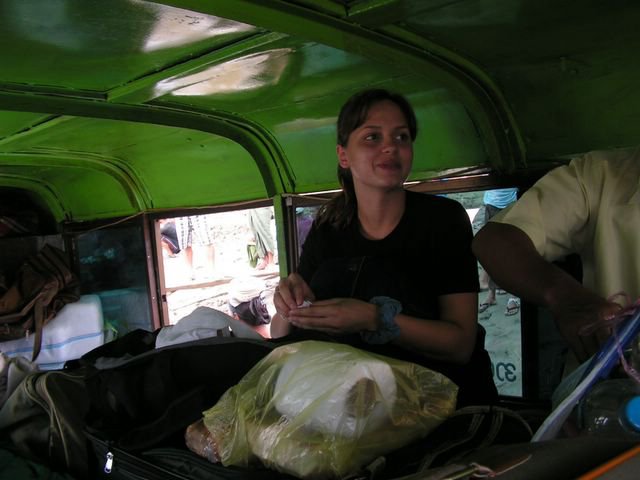


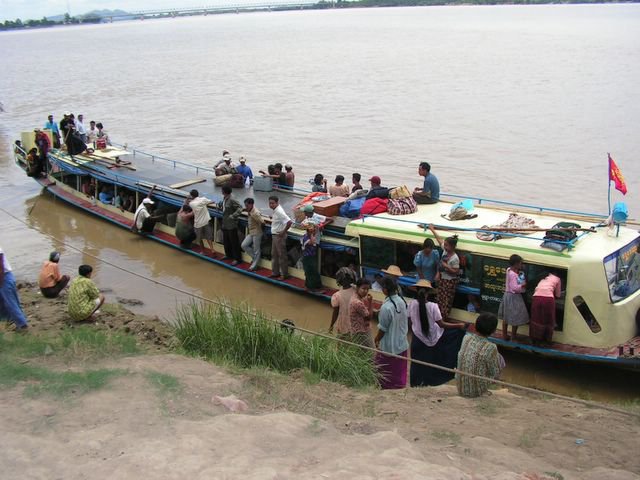
NEW TRIP PLANNED FOR FEBRUARY
Session of First Presbyterian Church of Rowlett has approved a new trip in February 2006 for Mission to Myanmar. A number of projects will be very close to completion by that time and we will hopefully be able to update this blog from Myanmar this trip.
The Burmese Psalter
All 312 selections have been translated into Burmese and we have already supplied JPGs for the tonic solfa notation. Thus during this February trip we hope to meet with a number of people who are fluent in both Burmese and English in order to smooth out the "metricizing" of the Psalter. It would be good if we had more people who were able to deal with both the Hebrew and Burmese, but the Burmese churches are a long way from having that capability and may not have it even in this generation. We probably will not be able to get to all 312 settings that have been translated, but if we can get to 100-150 by the end of my trip, then we will feel comfortable publishing this as an interim Psalter. We may recall that even the Reformed church at Geneva did not have the entire Psalter for many years after its founding.
Teaching at Reformed Bible Institute
It is my intention to teach a 3 semester hour course in the Pastoral Epistles during the time I am in Myanmar as well. This is made possible by the students concentrating on a single course while I am there. Thus in a period of three weeks we can teach for 4 to 5 hours per day five days a week and make the course material available to the students in a sort of "mini-mester." As an interesting "coincidence" the Aquila Project will be in Myanmar at the same time I am teaching the Pastoral Epistles to a group of (mostly) Baptist ministers there. Hopefully there will be some opportunity for "cross-pollinization" in our classes.
Additionally Dr. Thang Bwee, President of the Reformed Bible Institute has asked me to bring as many copies as possible of Louis Berkhof's Summary of Christian Doctrine published by Banner of Truth. There is an address below for anyone who would like to contribute to this. The books are about $6 each plus shipping. Or the books themselves could be sent to the same address.
The New Life Orphanage
Some of the readers of this blog know already what difficulty we had getting back from Tahan on the last trip (July 2005). During that trip the aircraft that was supposed to pick us up at the Kalemyo airport and return us to Yangon broke down during takeoff from Yangon. We were thus "stranded" in Tahan. However, some brothers were kind enough to take us to Kalewa where we caught a boat going down the Chindwin River to Monywa, where we rode first in the back of a pickup truck and then in an overcrowded bus to Mandalay.
Hopefully the trip to Tahan will not be quite so "eventful" this time, but we do hope to visit the orphanage in Tahan and help dedicate the new hostel to the glory of God. The NLO will use the new hostel not only for sleeping, but also for classrooms upstairs and a dining (messing) area downstairs. The reinforced concrete posts were already poured when I was there in July. The timbers have begun to arrive for the hostel and our carpenter is teaching the older boys how to plane the wood planks smooth.
Please begin praying for this trip. We are thankful for the prayers and generosity of the friends of this mission throughout the world.
Send contributions to:
Mission To Myanmar
c/o First Presbyterian Church
8210 Schrade Road
Rowlett, TX 75088
Session of First Presbyterian Church of Rowlett has approved a new trip in February 2006 for Mission to Myanmar. A number of projects will be very close to completion by that time and we will hopefully be able to update this blog from Myanmar this trip.
The Burmese Psalter
All 312 selections have been translated into Burmese and we have already supplied JPGs for the tonic solfa notation. Thus during this February trip we hope to meet with a number of people who are fluent in both Burmese and English in order to smooth out the "metricizing" of the Psalter. It would be good if we had more people who were able to deal with both the Hebrew and Burmese, but the Burmese churches are a long way from having that capability and may not have it even in this generation. We probably will not be able to get to all 312 settings that have been translated, but if we can get to 100-150 by the end of my trip, then we will feel comfortable publishing this as an interim Psalter. We may recall that even the Reformed church at Geneva did not have the entire Psalter for many years after its founding.
Teaching at Reformed Bible Institute
It is my intention to teach a 3 semester hour course in the Pastoral Epistles during the time I am in Myanmar as well. This is made possible by the students concentrating on a single course while I am there. Thus in a period of three weeks we can teach for 4 to 5 hours per day five days a week and make the course material available to the students in a sort of "mini-mester." As an interesting "coincidence" the Aquila Project will be in Myanmar at the same time I am teaching the Pastoral Epistles to a group of (mostly) Baptist ministers there. Hopefully there will be some opportunity for "cross-pollinization" in our classes.
Additionally Dr. Thang Bwee, President of the Reformed Bible Institute has asked me to bring as many copies as possible of Louis Berkhof's Summary of Christian Doctrine published by Banner of Truth. There is an address below for anyone who would like to contribute to this. The books are about $6 each plus shipping. Or the books themselves could be sent to the same address.
The New Life Orphanage
Some of the readers of this blog know already what difficulty we had getting back from Tahan on the last trip (July 2005). During that trip the aircraft that was supposed to pick us up at the Kalemyo airport and return us to Yangon broke down during takeoff from Yangon. We were thus "stranded" in Tahan. However, some brothers were kind enough to take us to Kalewa where we caught a boat going down the Chindwin River to Monywa, where we rode first in the back of a pickup truck and then in an overcrowded bus to Mandalay.
Hopefully the trip to Tahan will not be quite so "eventful" this time, but we do hope to visit the orphanage in Tahan and help dedicate the new hostel to the glory of God. The NLO will use the new hostel not only for sleeping, but also for classrooms upstairs and a dining (messing) area downstairs. The reinforced concrete posts were already poured when I was there in July. The timbers have begun to arrive for the hostel and our carpenter is teaching the older boys how to plane the wood planks smooth.
Please begin praying for this trip. We are thankful for the prayers and generosity of the friends of this mission throughout the world.
Send contributions to:
Mission To Myanmar
c/o First Presbyterian Church
8210 Schrade Road
Rowlett, TX 75088
Wednesday, July 13
Last Minute Items
We are in the midst of packing for the trip. I would ask that those who pray for us would begin to do so. Lord willing, we shall be leaving next Tuesday morning.
Broadcast or Podcast
Rev. John Owen Butler interviewed me by telephone today regarding the two upcoming Psalters for Burma. You can hear that at this URL. You are looking for Psalmcast 015.
English as a Second Language
Things are really coming together to teach these young men theological English and to spread the Word of God via English lessons. Please pray for God's Word to have free course.
Keeping Up To Date
I will hopefully have internet connections while in MM, and will update this blog frequently while I am in country for the next month. Please check back often.
RB
We are in the midst of packing for the trip. I would ask that those who pray for us would begin to do so. Lord willing, we shall be leaving next Tuesday morning.
Broadcast or Podcast
Rev. John Owen Butler interviewed me by telephone today regarding the two upcoming Psalters for Burma. You can hear that at this URL. You are looking for Psalmcast 015.
English as a Second Language
Things are really coming together to teach these young men theological English and to spread the Word of God via English lessons. Please pray for God's Word to have free course.
Keeping Up To Date
I will hopefully have internet connections while in MM, and will update this blog frequently while I am in country for the next month. Please check back often.
RB
Tuesday, June 14
Great News On Our Visas
This is the first trip we have planned for Myanmar in which the visas actually arrived within a reasonable time. All praise be to God who has provided for this need! There have been times in years and trips gone by in which we have been waiting right up until the last few days before the visas arrived from the MM embassy.
Getting Fit For The Trip
I've been walking between four and five miles a day in order to increase my physical fitness and endurance for the trip to Myanmar. It is the rainy season in the tropics right now. I'm hoping to preach at the Mt. Zion Reformed Church, which is at the top of an eight-story ladder. So, the physical training involved in getting ready for such a trip is taking about two hours a day in physical exercise.
The Orphanage Hostel is Nearing . . .
As the orphans of the New Life Orphanage get older, it becomes increasingly important for many reasons that we have separate hostels for the boys and girls. A hostel is what everyone else in the world calls a dormitory. As some of you know, the orphans and their neighbors just built a large capacity septic field, which will accomodate 10 toilets. Much of the work necessary for the hostel will also be done by the faculty, staff, and older children of the New Life Orphanage. As a result, we expect to be able to build a brick nogging structure for approximately $6.67 per foot. We had the cost estimating done by a firm in Yangon, but we expect the total cost to remain about the same even in Tahan. The materials will be a bit higher, but we expect the labor to be lower due to the lower labor "rates" in the vicinity and because we anticipate a lot of volunteer help from the faculty, staff, and even interested neighbors.
The hostel, which measures overall 58' by 24', will have two stories, each with a wooden floor. Some of the wood will be simple (cheap) "jungle wood" and some of it will be the more expensive teak. The actual living area will be about 50x18x2 = 1800 square feet. The children will not have individual rooms, but will share a large hall and simply roll up their bamboo or cotton mats during the day and use at least one of the stories for class "rooms."
The overall cost of the building will be approximately $12,000 U.S. Of that amount, just over $10,000 has already been raised. But we would really love to be able to turn over the first spade of dirt while I am there next month. To do that, we will need some more contributions to this fund. The regular living expenses are taken care of by First Presbyterian Church of Rowlett and the orphans themselves, though we could certainly use regular help on that count as well.
Readers might be surprised to learn how a small gift can be used mightily in Myanmar. I wish you could all read the letters the orphans have written to us showing the gratitude these little children have to you who have helped in the past. They pray every night for those who have helped them. They praise the Lord for those who have given money so that they might have food, clothing and shelter. And in an act of Christian charity of their own, they, who to us seem to have almost nothing, fast one day a week and give a portion to those more needy than themselves.
Are you carrying 1000 bricks in your pocket? Set out a jar and begin to toss in your spare change each night. Every dollar will buy over 30 bricks. Every brick will help build a wall, which will help build a hostel, which will help build an orphanage, where young souls are being “built” for the kingdom of God.
How You Can Help
To make a contribution to the hostel fund for the Myanmar orphans, you can use either a check or money order and send it by mail to the address below or you can use a credit card or bank account that you have tied to "Paypal." To use paypal, point your browser to this URL: http://www.fpcr.org/missions.htm. Then click on button that says "Make a donation" and follow the instructions. Be sure to comment that your contribution is for the Myanmar orphanage hostel (or "New Life" orphanage). We praise God for any help you can tender.
To make a contribution by check or money order, please send it to:
Mission to Myanmar Hostel Fund
c/o First Presbyterian Church of Rowlett
8210 Schrade Road
Rowlett, TX 75088
It is my intention to leave the DFW area on July 19th, so please try to contribute before I leave if it is in your power to do so.
The Reformed Bible Institute
It is my hope to teach two seminary level courses at the Reformed Bible Institute this trip. I will teach the same hermeneutics course I have taught in the past and will also be teaching a course in New Testament Introduction. It is our hope that some students will also attend from other sems; esp. that of which Rev. Henry Mang is president.
English As A Foreign Language
We will be taking an English teacher with us, DV. Miss Hannah Allie will be spending the month in Myanmar teaching English as a Second Language (or English as a Foreign Language as it is known there). Please be especially in prayer for Miss Hannah. There are already enough students signed up for her to teach at least two classes.
RB
This is the first trip we have planned for Myanmar in which the visas actually arrived within a reasonable time. All praise be to God who has provided for this need! There have been times in years and trips gone by in which we have been waiting right up until the last few days before the visas arrived from the MM embassy.
Getting Fit For The Trip
I've been walking between four and five miles a day in order to increase my physical fitness and endurance for the trip to Myanmar. It is the rainy season in the tropics right now. I'm hoping to preach at the Mt. Zion Reformed Church, which is at the top of an eight-story ladder. So, the physical training involved in getting ready for such a trip is taking about two hours a day in physical exercise.
The Orphanage Hostel is Nearing . . .
As the orphans of the New Life Orphanage get older, it becomes increasingly important for many reasons that we have separate hostels for the boys and girls. A hostel is what everyone else in the world calls a dormitory. As some of you know, the orphans and their neighbors just built a large capacity septic field, which will accomodate 10 toilets. Much of the work necessary for the hostel will also be done by the faculty, staff, and older children of the New Life Orphanage. As a result, we expect to be able to build a brick nogging structure for approximately $6.67 per foot. We had the cost estimating done by a firm in Yangon, but we expect the total cost to remain about the same even in Tahan. The materials will be a bit higher, but we expect the labor to be lower due to the lower labor "rates" in the vicinity and because we anticipate a lot of volunteer help from the faculty, staff, and even interested neighbors.
The hostel, which measures overall 58' by 24', will have two stories, each with a wooden floor. Some of the wood will be simple (cheap) "jungle wood" and some of it will be the more expensive teak. The actual living area will be about 50x18x2 = 1800 square feet. The children will not have individual rooms, but will share a large hall and simply roll up their bamboo or cotton mats during the day and use at least one of the stories for class "rooms."
The overall cost of the building will be approximately $12,000 U.S. Of that amount, just over $10,000 has already been raised. But we would really love to be able to turn over the first spade of dirt while I am there next month. To do that, we will need some more contributions to this fund. The regular living expenses are taken care of by First Presbyterian Church of Rowlett and the orphans themselves, though we could certainly use regular help on that count as well.
Readers might be surprised to learn how a small gift can be used mightily in Myanmar. I wish you could all read the letters the orphans have written to us showing the gratitude these little children have to you who have helped in the past. They pray every night for those who have helped them. They praise the Lord for those who have given money so that they might have food, clothing and shelter. And in an act of Christian charity of their own, they, who to us seem to have almost nothing, fast one day a week and give a portion to those more needy than themselves.
Are you carrying 1000 bricks in your pocket? Set out a jar and begin to toss in your spare change each night. Every dollar will buy over 30 bricks. Every brick will help build a wall, which will help build a hostel, which will help build an orphanage, where young souls are being “built” for the kingdom of God.
How You Can Help
To make a contribution to the hostel fund for the Myanmar orphans, you can use either a check or money order and send it by mail to the address below or you can use a credit card or bank account that you have tied to "Paypal." To use paypal, point your browser to this URL: http://www.fpcr.org/missions.htm. Then click on button that says "Make a donation" and follow the instructions. Be sure to comment that your contribution is for the Myanmar orphanage hostel (or "New Life" orphanage). We praise God for any help you can tender.
To make a contribution by check or money order, please send it to:
Mission to Myanmar Hostel Fund
c/o First Presbyterian Church of Rowlett
8210 Schrade Road
Rowlett, TX 75088
It is my intention to leave the DFW area on July 19th, so please try to contribute before I leave if it is in your power to do so.
The Reformed Bible Institute
It is my hope to teach two seminary level courses at the Reformed Bible Institute this trip. I will teach the same hermeneutics course I have taught in the past and will also be teaching a course in New Testament Introduction. It is our hope that some students will also attend from other sems; esp. that of which Rev. Henry Mang is president.
English As A Foreign Language
We will be taking an English teacher with us, DV. Miss Hannah Allie will be spending the month in Myanmar teaching English as a Second Language (or English as a Foreign Language as it is known there). Please be especially in prayer for Miss Hannah. There are already enough students signed up for her to teach at least two classes.
RB
Friday, April 1
A Letter From Myanmar
In much of the letter that follows, please understand the references to "Dr. Bacon" to refer to the Mission To Myanmar, and its supporters. For many of these orphans, I am the "face" of your generous contributions.
________________________________________________________________
Dear Dr.Bacon,
Greetings in the name of our Lord Jesus Christ.
We acknowledge receipt of the precious gift of $X intact which you sent for the glory of god. No words can express our joy and gratitude. According to your prayers, we will use this offering wisely and economically so that it will be of the greatest benefit for the New life orphans.
We are goaded and stimulated to activity by your love and consideration for our well being, health and happiness. It strengthens us physically and spiritually. In the eyes of New life orphanage and the children, it enhances the grace, glory and greatness of God.
We cannot help glorying in the Lord because though we are the poorest orphan family, God has arranged and given us Dr. Richard Bacon's family and the holy Reformed Churches to be our parents: and the most wonderful thing is that they live for away across the ocean where the stars at night are big and bright, and coyotes wail along the trail, deep in the heart of Texas!
We are completely and fully aware of the goodness and greatness of God. Due to your prayers and the grace of Jesus Christ, we will grow, develop and progress, because we are of the Reformed Church, " of them that believe to the saving of the soul" (Hebrews 10:39).
By the way, our youngest orphan named Isaiah, who is only four years old asked this question: "Is Dr. Bacon God? He can send us o much money!" I answered, " No, he isn't. He is a man God uses."
Matthew who is twelve years old added: "He must be a seed of Abraham in whom all nations are blest; as for us, we are like the man the Good Samaritan helped and gave two pence to the inn keeper for taking care of him."
On the last Saturday of each month we keep a vigil and pray all through the night. Every Monday we fast and pray; and we give our breakfast, lunch and dinner to poor families. We preach the Gospel in their homes and pray for them. Job, who is 5 years old, said to them.
" These gifts are not from us. They are from Dr. Bacon, a man God uses. Please pray always for Pu Bacon."
Seven year old Joshua said, " If there was no Dr. Bacon, we wouldn't be living here together ; we wouldn't have any schooling or Bible study. Maybe we would have died of hunger and ended up in the lake of fire!"
Isaac, who is 15 years old and temperamental, said: "We are used to seeing only eight cups of rice at one time; but now, due to Dr. Bacon we can feast our eyes on thirty bags of rice!" With tears flowing down his cheeks, he hugged and caressed a bag of rice. "It is due to Mr.Bacon that I am now learning to drive a car."So saying, he knelt near the bags of nice and prayed, fervidly praising and glorifying the Lord.
Forgive me for writing some of the words and questions which came out of the mouths of babes and sucklings. Most of the mail we receive from you regarding the New life children is read before them and explained discreetly. It fills them with unspeakable joy. We pray often for the wherewithal to build their new home. It has caused a turning point in the life of Joseph, a five year old boy. We heard him saying to some of the other children, " Don't be snobbish! take care of your books and clothing. We are going to live in a new building."
We have to thank you for multifarious things. If what we have mentioned is not complete we hope you will understand our speechless joy and gratitude by reading between the lines.
May the Lord bless you all, and may He bless your ministry always.
On behalf of New life ministry and the children I remain,
Your fellow-worker in the Lord's Vineyard
Rev. Moses.
___________________________________________________________
A Direct Appeal
Rev. Moses refers in this letter to a "new building." On my last trip to Myanmar, we arranged for an architect to design and "cost-estimate" the building of a two-story hostel for the orphanage. Many of them, as is evident from their stories above, have reached an age where we simply must separate the boys from the girls. A two-story "brick nogging" hostel is estimated to run about USD 12,000. I do not ordinarily make such direct appeals on the Burma Blog, but this is a pressing matter. The older children are themselves already digging and leveling for a foundation to be laid. If it would be possible for the readers to help in any amount, it would abound to the glory of the Lord Jesus in that far away land.
Please send any contributions to :
Mission To Myanmar
c/0 First Presbyterian Church of Rowlett
8210 Schrade Road
Rowlett, TX 75088
In much of the letter that follows, please understand the references to "Dr. Bacon" to refer to the Mission To Myanmar, and its supporters. For many of these orphans, I am the "face" of your generous contributions.
________________________________________________________________
Dear Dr.Bacon,
Greetings in the name of our Lord Jesus Christ.
We acknowledge receipt of the precious gift of $X intact which you sent for the glory of god. No words can express our joy and gratitude. According to your prayers, we will use this offering wisely and economically so that it will be of the greatest benefit for the New life orphans.
We are goaded and stimulated to activity by your love and consideration for our well being, health and happiness. It strengthens us physically and spiritually. In the eyes of New life orphanage and the children, it enhances the grace, glory and greatness of God.
We cannot help glorying in the Lord because though we are the poorest orphan family, God has arranged and given us Dr. Richard Bacon's family and the holy Reformed Churches to be our parents: and the most wonderful thing is that they live for away across the ocean where the stars at night are big and bright, and coyotes wail along the trail, deep in the heart of Texas!
We are completely and fully aware of the goodness and greatness of God. Due to your prayers and the grace of Jesus Christ, we will grow, develop and progress, because we are of the Reformed Church, " of them that believe to the saving of the soul" (Hebrews 10:39).
By the way, our youngest orphan named Isaiah, who is only four years old asked this question: "Is Dr. Bacon God? He can send us o much money!" I answered, " No, he isn't. He is a man God uses."
Matthew who is twelve years old added: "He must be a seed of Abraham in whom all nations are blest; as for us, we are like the man the Good Samaritan helped and gave two pence to the inn keeper for taking care of him."
On the last Saturday of each month we keep a vigil and pray all through the night. Every Monday we fast and pray; and we give our breakfast, lunch and dinner to poor families. We preach the Gospel in their homes and pray for them. Job, who is 5 years old, said to them.
" These gifts are not from us. They are from Dr. Bacon, a man God uses. Please pray always for Pu Bacon."
Seven year old Joshua said, " If there was no Dr. Bacon, we wouldn't be living here together ; we wouldn't have any schooling or Bible study. Maybe we would have died of hunger and ended up in the lake of fire!"
Isaac, who is 15 years old and temperamental, said: "We are used to seeing only eight cups of rice at one time; but now, due to Dr. Bacon we can feast our eyes on thirty bags of rice!" With tears flowing down his cheeks, he hugged and caressed a bag of rice. "It is due to Mr.Bacon that I am now learning to drive a car."So saying, he knelt near the bags of nice and prayed, fervidly praising and glorifying the Lord.
Forgive me for writing some of the words and questions which came out of the mouths of babes and sucklings. Most of the mail we receive from you regarding the New life children is read before them and explained discreetly. It fills them with unspeakable joy. We pray often for the wherewithal to build their new home. It has caused a turning point in the life of Joseph, a five year old boy. We heard him saying to some of the other children, " Don't be snobbish! take care of your books and clothing. We are going to live in a new building."
We have to thank you for multifarious things. If what we have mentioned is not complete we hope you will understand our speechless joy and gratitude by reading between the lines.
May the Lord bless you all, and may He bless your ministry always.
On behalf of New life ministry and the children I remain,
Your fellow-worker in the Lord's Vineyard
Rev. Moses.
___________________________________________________________
A Direct Appeal
Rev. Moses refers in this letter to a "new building." On my last trip to Myanmar, we arranged for an architect to design and "cost-estimate" the building of a two-story hostel for the orphanage. Many of them, as is evident from their stories above, have reached an age where we simply must separate the boys from the girls. A two-story "brick nogging" hostel is estimated to run about USD 12,000. I do not ordinarily make such direct appeals on the Burma Blog, but this is a pressing matter. The older children are themselves already digging and leveling for a foundation to be laid. If it would be possible for the readers to help in any amount, it would abound to the glory of the Lord Jesus in that far away land.
Please send any contributions to :
Mission To Myanmar
c/0 First Presbyterian Church of Rowlett
8210 Schrade Road
Rowlett, TX 75088
Tuesday, March 15

A Bit of Rehearsal
I have been a visitor to Myanmar eight times since November 2000. One of the visits was for a period of eight weeks when I went there in the Rainy Season of 2003 with my wife and son. Most of the visits, however, have been for periods ranging from one week "on the ground" to four weeks "on the ground."
My first visit to Myanmar was on a sort of "fact-finding" mission. Would there be significant interest in the gospel in this country to justify further time and monetary resources being allocated to the project? We determined at that time that we would stay in contact with the people we met, but would not expend great amounts of money by sending it to the nationals with whom we were in contact at that time.
Our greatest concern at the time was over a phenomenon known variously as "rice Christianity" or "the old system." John L. Nevius wrote works variously known as Methods of Mission Work or available in print form as The Planting and Development of Missionary Churches from Monadnock Press.
Nevius stated (this is an 1895 work) the old system and the new, "may be distinguished in general by the former depending largely on paid native agency, while the latter deprecates and seeks to minimize such agency. Perhaps an equally correct and more generally acceptable statement of the difference would be, that while both alike seek ultimately the establishment of independent, self-reliant, and aggressive native churches, the Old System strives by the use of foreign funds to foster and stimulate the growth of native churches in the first stage of their development, and then gradually to discontinue the use of such funds; while those who adopt the New System think that the desired object may be best obtained by applying principles of independence and self-reliance from the beginning." [p. 18]
How This Applies To Us
When the derisive term "rice Christianity" is used, it may raise the specter of people becoming Christians simply because they are paid to become Christians. Thus they would become Buddhists if the Buddhists were proselytizing with funds; or Muslims or Hindus, or any other religion. While there is some of that going on, just as there is in this country (think "Word of Faith"), that is not precisely the difficulty of the mission field that Nevius was trying to address.
Nevius himself acknowledged that the "Old System" or "Old Method" was a natural one that would occur to most people. He stated, "It is only natural that missionaries should at first seek and employ many native agents. They are anxious for immediate results, and home societies and the home churches are as impatient to hear of results as missionaries are to report them" [p. 21]. Not impatience alone, however, but practical considerations as well, may contribute to this approach. After all, it takes many years to become proficient in a new language, even when living among the native speakers of that language. And the plain fact is that most missionaries isolate themselves from the native speakers for the first part of their term on the field.
There is another motive that conspires with the first to bring about the method about which Nevius complained. China, which was Nevius' field, and Burma (Myanmar) both suffer from extreme poverty. Further, it is no secret that it is generally amongst the poorest of a region that the gospel finds its quickest acceptance. The native population is generally willing to work for far less money and will require far fewer resources than would a western missionary. Thus it is that the desire for rapid results and the fact that native agents will work for far less money than the foreign missionary work together to bring about a system in which foreign funds become the determiner of where and how the gospel will be preached. This is not to say that native workers should never be employed. Nevius went on to say, "I fully recognize the fact that the employment and pay of native laborers is under suitable circumstances, legitimate and desirable, as much so as the employment and pay of foreigners. Here, however, the important questions arise, who shall be employed, and when and how shall they be employed" [p. 22].
What We Found
Much of the difficulty in the Myanmar churches -- at least in the Evangelical and Reformed denominations -- was a problem of western missionary zeal. Ministers in the churches regarded manual labor and even intellectual labor to be unbecoming of a minister of the gospel. Working a "day job" was regarded as somehow beneath someone who was called to be a minister. They let their wives and children support them financially; but supporting themselves by becoming or remaining bivocational was considered as spiritually unfitting. This had a number of harmful effects on the churches in Myanmar.
First, it confirmed a tribal system of church polity. The founder and president of a denomination could control the funds coming to his denomination from a foreign church. This led in the space of just a few years of the churches becoming tribes under the benevolent care of their chiefs (presidents and founders). Church boards, sessions, classes, and so forth were made mere "yes-men" because the founder and president was the controller of the funds, the salaries, stipends, and eventually even of ordination.
Second, there is a harm to the paid agent himself. He is placed in a position of tremendous temptation. This is a temptation that few mature Christians could consistently withstand; much less a Christian of only a few years. These men may originally have been farmers, shopkeepers, laborers, or even professionals; but they now find themselves in a calling for which they are ill suited and poorly prepared. Those who were quite capable in their original callings become little more than toadies to the foreign missionaries in order to secure foreign funding for their projects.
Third, the system makes it difficult or impossible to distinguish the true from the false. Money tends to turn people generally into dissemblers, and this is no less true of the Myanmar than it is of Americans or any other nationality. It is not surprising to those who believe in total depravity the extent to which not only allegiances, but even theology, becomes flexible when in search of funds. Arminians become Calvinists and then Arminians again as first one denomination and then another bids for their faith. This is not to say that every person who participates in the system is a hypocrite; but a good tribal chief does what he can to provide funding for his tribe. This again, is as true in the USA as it is in Myanmar. We have simply exported our version of church membership to the highest bidding church to the mission field.
Fourth, by distinguishing native agents with pay, we lessen the number of volunteer evangelists. Again, this is often as true in the USA as it is elsewhere. "It is the preacher's job" is as much a problem here as it is elsewhere. We exasperate the problem, however, when it is not the local group that is making the minister's stipend, but a foreign mission board or church that is guaranteeing it. The work is then seen not so much as the work of the local church or national denomination, but the work of the foreign missionary who has hired the locals to help.
Finally, the testimony to the surrounding unbelievers is that Christianity is a religion in which the native population is "undermined" by foreign monies. It is little wonder that the native population cannot see missions as a spiritual enterprise, when the local Christians and foreign missionaries do not treat it as a spiritual enterprise, but as a commercial one.
What We Were Looking For
The Scripture speaks regarding one who would enter office in the church. Among other qualifications, we read that he is to be "not a novice, lest being puffed up he fall into the condemnation of the devil" [1 Timothy 3:6]. The first thing we were looking for, then, was someone who had been a Christian for a number of years and who had some experience, education, and could present a convincing testimony of a calling to the minstry of the gospel.
Another important thing we were looking for was someone who had a spiritual understanding of the mission of the church. No doubt, diaconal enterprises are important. But they should flow from the spiritual understanding and not from a physical understanding. The diaconal enterprise can very quickly become a bribe in the hands of the inexperienced or unscrupulous.
The third thing we were looking for was a reformed understanding of church polity. This does not mean that we believe that polity is at the center of the gospel message (though it is far more important than many realize). Rather, the importance of this item lay in the fact that it is necessary to renounce the tribal chieftain form of church polity (the "founder and president") in order to overcome the harmful effects of the paid agency form of foreign missions. This is an application of the gospel principle of 1 Corinthians 9:14, that the gospel preacher should ordinarily make his living by the preaching of the gospel.
We Found Such A One On The Fourth Trip
Or perhaps it would be more accurate to say that someone found him for us. During the rainy season visit of 2002, I made arrangements to spend a few days with a Korean pastor named Rev. Changwon Shu (pronounced "Saw"). Before arriving in country, I had opportunity to correspond with Rev. Shu a number of times by email. We made arrangements to meet one another in Yangon and there he introduced me to Rev. Thang Bwee.
Rev. Thang Bwee was a man in his 40s who was altogether intent upon developing a "three-self" church in Myanmar. Thang Bwee became familiar with the three self concept while studying in Korea. The three self church refers to an indigenous church that is "self-supporting, self-governing, and self-propagating."
More on this in the next Blog entry.
RB
I have been a visitor to Myanmar eight times since November 2000. One of the visits was for a period of eight weeks when I went there in the Rainy Season of 2003 with my wife and son. Most of the visits, however, have been for periods ranging from one week "on the ground" to four weeks "on the ground."
My first visit to Myanmar was on a sort of "fact-finding" mission. Would there be significant interest in the gospel in this country to justify further time and monetary resources being allocated to the project? We determined at that time that we would stay in contact with the people we met, but would not expend great amounts of money by sending it to the nationals with whom we were in contact at that time.
Our greatest concern at the time was over a phenomenon known variously as "rice Christianity" or "the old system." John L. Nevius wrote works variously known as Methods of Mission Work or available in print form as The Planting and Development of Missionary Churches from Monadnock Press.
Nevius stated (this is an 1895 work) the old system and the new, "may be distinguished in general by the former depending largely on paid native agency, while the latter deprecates and seeks to minimize such agency. Perhaps an equally correct and more generally acceptable statement of the difference would be, that while both alike seek ultimately the establishment of independent, self-reliant, and aggressive native churches, the Old System strives by the use of foreign funds to foster and stimulate the growth of native churches in the first stage of their development, and then gradually to discontinue the use of such funds; while those who adopt the New System think that the desired object may be best obtained by applying principles of independence and self-reliance from the beginning." [p. 18]
How This Applies To Us
When the derisive term "rice Christianity" is used, it may raise the specter of people becoming Christians simply because they are paid to become Christians. Thus they would become Buddhists if the Buddhists were proselytizing with funds; or Muslims or Hindus, or any other religion. While there is some of that going on, just as there is in this country (think "Word of Faith"), that is not precisely the difficulty of the mission field that Nevius was trying to address.
Nevius himself acknowledged that the "Old System" or "Old Method" was a natural one that would occur to most people. He stated, "It is only natural that missionaries should at first seek and employ many native agents. They are anxious for immediate results, and home societies and the home churches are as impatient to hear of results as missionaries are to report them" [p. 21]. Not impatience alone, however, but practical considerations as well, may contribute to this approach. After all, it takes many years to become proficient in a new language, even when living among the native speakers of that language. And the plain fact is that most missionaries isolate themselves from the native speakers for the first part of their term on the field.
There is another motive that conspires with the first to bring about the method about which Nevius complained. China, which was Nevius' field, and Burma (Myanmar) both suffer from extreme poverty. Further, it is no secret that it is generally amongst the poorest of a region that the gospel finds its quickest acceptance. The native population is generally willing to work for far less money and will require far fewer resources than would a western missionary. Thus it is that the desire for rapid results and the fact that native agents will work for far less money than the foreign missionary work together to bring about a system in which foreign funds become the determiner of where and how the gospel will be preached. This is not to say that native workers should never be employed. Nevius went on to say, "I fully recognize the fact that the employment and pay of native laborers is under suitable circumstances, legitimate and desirable, as much so as the employment and pay of foreigners. Here, however, the important questions arise, who shall be employed, and when and how shall they be employed" [p. 22].
What We Found
Much of the difficulty in the Myanmar churches -- at least in the Evangelical and Reformed denominations -- was a problem of western missionary zeal. Ministers in the churches regarded manual labor and even intellectual labor to be unbecoming of a minister of the gospel. Working a "day job" was regarded as somehow beneath someone who was called to be a minister. They let their wives and children support them financially; but supporting themselves by becoming or remaining bivocational was considered as spiritually unfitting. This had a number of harmful effects on the churches in Myanmar.
First, it confirmed a tribal system of church polity. The founder and president of a denomination could control the funds coming to his denomination from a foreign church. This led in the space of just a few years of the churches becoming tribes under the benevolent care of their chiefs (presidents and founders). Church boards, sessions, classes, and so forth were made mere "yes-men" because the founder and president was the controller of the funds, the salaries, stipends, and eventually even of ordination.
Second, there is a harm to the paid agent himself. He is placed in a position of tremendous temptation. This is a temptation that few mature Christians could consistently withstand; much less a Christian of only a few years. These men may originally have been farmers, shopkeepers, laborers, or even professionals; but they now find themselves in a calling for which they are ill suited and poorly prepared. Those who were quite capable in their original callings become little more than toadies to the foreign missionaries in order to secure foreign funding for their projects.
Third, the system makes it difficult or impossible to distinguish the true from the false. Money tends to turn people generally into dissemblers, and this is no less true of the Myanmar than it is of Americans or any other nationality. It is not surprising to those who believe in total depravity the extent to which not only allegiances, but even theology, becomes flexible when in search of funds. Arminians become Calvinists and then Arminians again as first one denomination and then another bids for their faith. This is not to say that every person who participates in the system is a hypocrite; but a good tribal chief does what he can to provide funding for his tribe. This again, is as true in the USA as it is in Myanmar. We have simply exported our version of church membership to the highest bidding church to the mission field.
Fourth, by distinguishing native agents with pay, we lessen the number of volunteer evangelists. Again, this is often as true in the USA as it is elsewhere. "It is the preacher's job" is as much a problem here as it is elsewhere. We exasperate the problem, however, when it is not the local group that is making the minister's stipend, but a foreign mission board or church that is guaranteeing it. The work is then seen not so much as the work of the local church or national denomination, but the work of the foreign missionary who has hired the locals to help.
Finally, the testimony to the surrounding unbelievers is that Christianity is a religion in which the native population is "undermined" by foreign monies. It is little wonder that the native population cannot see missions as a spiritual enterprise, when the local Christians and foreign missionaries do not treat it as a spiritual enterprise, but as a commercial one.
What We Were Looking For
The Scripture speaks regarding one who would enter office in the church. Among other qualifications, we read that he is to be "not a novice, lest being puffed up he fall into the condemnation of the devil" [1 Timothy 3:6]. The first thing we were looking for, then, was someone who had been a Christian for a number of years and who had some experience, education, and could present a convincing testimony of a calling to the minstry of the gospel.
Another important thing we were looking for was someone who had a spiritual understanding of the mission of the church. No doubt, diaconal enterprises are important. But they should flow from the spiritual understanding and not from a physical understanding. The diaconal enterprise can very quickly become a bribe in the hands of the inexperienced or unscrupulous.
The third thing we were looking for was a reformed understanding of church polity. This does not mean that we believe that polity is at the center of the gospel message (though it is far more important than many realize). Rather, the importance of this item lay in the fact that it is necessary to renounce the tribal chieftain form of church polity (the "founder and president") in order to overcome the harmful effects of the paid agency form of foreign missions. This is an application of the gospel principle of 1 Corinthians 9:14, that the gospel preacher should ordinarily make his living by the preaching of the gospel.
We Found Such A One On The Fourth Trip
Or perhaps it would be more accurate to say that someone found him for us. During the rainy season visit of 2002, I made arrangements to spend a few days with a Korean pastor named Rev. Changwon Shu (pronounced "Saw"). Before arriving in country, I had opportunity to correspond with Rev. Shu a number of times by email. We made arrangements to meet one another in Yangon and there he introduced me to Rev. Thang Bwee.
Rev. Thang Bwee was a man in his 40s who was altogether intent upon developing a "three-self" church in Myanmar. Thang Bwee became familiar with the three self concept while studying in Korea. The three self church refers to an indigenous church that is "self-supporting, self-governing, and self-propagating."
More on this in the next Blog entry.
RB
Friday, March 11

The Three Faces of Burma
On the left is a fairly "western" individual. Many Burmese want nothing more than to be like their western counterparts. In the center, in front of the monk, is a typical traditional Burmese. He is wearing the traditional "longyi," which is the Burmese version of the netherwear of the region. Finally, rightmost in the picture is the paya -- a holy man of the Buddhist faith. Thus it is that Burma has three faces -- a western face, a traditional face, and a religious face.
On the left is a fairly "western" individual. Many Burmese want nothing more than to be like their western counterparts. In the center, in front of the monk, is a typical traditional Burmese. He is wearing the traditional "longyi," which is the Burmese version of the netherwear of the region. Finally, rightmost in the picture is the paya -- a holy man of the Buddhist faith. Thus it is that Burma has three faces -- a western face, a traditional face, and a religious face.
Tuesday, February 22
Back In The USofA
Actually I landed at DFW just after 6:00 PM last Friday (2/18). But it has taken this long to get my days and nights straightened out, and I'm not sure if I have done it even now. It takes awhile to overcome jet lag when the displacement is almost exactly one half day. I led the worship at both services on this past Lord's Day (2/20), but left the preaching to Rev. Todd Ruddell and our Licentiate, Thomas Allie.
Psalter Status
Or perhaps it would be better at this point to report on the status of the Psalters (plural). We had already invested a considerable amount of time and resources into a Falam language Psalter. Falam is the language spoken by most of the reformed denominations in Myanmar. However, when I was in MM in the rainy season of 2003, it became more and more apparent that if the gospel is going to permeate the nation as a whole, the Psalter needs to be in the official language of the nation. Burmese, or as the government now calls it "Myanmar," is the official language of the nation and so I encouraged some of the reformed men -- especially those who do not speak Falam -- to consider translating the Psalter into Burmese.
Not only had they done much of the translation work, they had also done some of the musical notation as well. The Burmese sing using what is commonly called "sol-fa" notation. It is not so familiar here in the US, but is quite well known in other parts of the world. They have presently translated 150 Psalter settings, but do not have all the sol-fa notation they need. We have a large number of Psalm tunes already done in sol-fa from last February's work, so we may be able to help out a lot in this area.
They had already published 26 Psalms to form a small songbook for use in their worship services. While I was there I helped them publish some more copies of the book, but the typesetting and so on has all been their own labor up to now. It is our hope that the 150 settings that have been translated will be revised and typeset by next August and be ready for publication by that time.
The Teaching Went Well
We worked very closely with RBI on this trip as far as teaching is concerned. RBI bases all its instruction on the Burmese language as well. English has become a sort of necessity for now because there are really no standard theology books written in Burmese. But it is far more reasonable to teach in the national language than in one of the tribal languages, given the fact that there are over 100 tribal languages in the Union of Myanmar.
This trip, being short as it was, I taught only a single course. The course was in "Covenant Theology." The idea was to show how theology fits together. The students will have plenty of time over four years (five years for some of the students) to learn the various loci of theology in their several particulars. The idea of the CT course is to show them how the various loci fit together to form a sort of "unified whole." The students did quite well, though I did not personally grade their final exams.
An Invitation To Teach Again
President Thang Bwee of the RBI has asked me to come again in August, which will be a new school year, to teach two more courses over four weeks. By teaching a single course for five hours per day over two weeks, we essentially cover a semester of lecture time in the two week period. If I am able to come for four weeks in August, then Rev. Thang Bwee has asked me to teach a course in New Testament Introduction and a course in Hermeneutics.
I Didn't Get To See The Orphans
But Moses Dawnga did come to Yangon to see me. The work is progressing very well at the New Life Orphanage. Of course in any developing country one must beware of the fact that the perceived needs are far greater than the developed world can provide by simple gift. The old adage about giving a fish and teaching a man how to fish is well to keep in mind when dealing with such matters.
The children are all learning to work in the rice paddy. At planting time, they get out into the mud and silt and help with the planting. At harvest, they bring in the crop and bag it for their own consumption. In fact, they are actually producing most of their own rice at this point and the food expense has been reduced to curry (meaning vegetables every day and meat three times a week), cook's salary, and firewood. Five of the young men over the age of 15 have taken work outside the orphanage during the day at such jobs as mechanic, weaver, etc. So the reformed worldview of calling (vocation) and the so-called "puritan work-ethic" is beginning to thrive among the orphans.
They are in need of a few things that they cannot supply for themselves. One is an upgraded septic system. They can do most of the labor, but they need funds for the supplies to build a three stage septic system. They are also in need of greater hostel space. If any of the readers of this blog would like to help in that regard, please direct your inquiries to:
Mission to Myanmar
c/o First Presbyterian Church
8210 Schrade Road
Rowlett, TX 75088 USA
+1 972-475-2184
RB
Actually I landed at DFW just after 6:00 PM last Friday (2/18). But it has taken this long to get my days and nights straightened out, and I'm not sure if I have done it even now. It takes awhile to overcome jet lag when the displacement is almost exactly one half day. I led the worship at both services on this past Lord's Day (2/20), but left the preaching to Rev. Todd Ruddell and our Licentiate, Thomas Allie.
Psalter Status
Or perhaps it would be better at this point to report on the status of the Psalters (plural). We had already invested a considerable amount of time and resources into a Falam language Psalter. Falam is the language spoken by most of the reformed denominations in Myanmar. However, when I was in MM in the rainy season of 2003, it became more and more apparent that if the gospel is going to permeate the nation as a whole, the Psalter needs to be in the official language of the nation. Burmese, or as the government now calls it "Myanmar," is the official language of the nation and so I encouraged some of the reformed men -- especially those who do not speak Falam -- to consider translating the Psalter into Burmese.
Not only had they done much of the translation work, they had also done some of the musical notation as well. The Burmese sing using what is commonly called "sol-fa" notation. It is not so familiar here in the US, but is quite well known in other parts of the world. They have presently translated 150 Psalter settings, but do not have all the sol-fa notation they need. We have a large number of Psalm tunes already done in sol-fa from last February's work, so we may be able to help out a lot in this area.
They had already published 26 Psalms to form a small songbook for use in their worship services. While I was there I helped them publish some more copies of the book, but the typesetting and so on has all been their own labor up to now. It is our hope that the 150 settings that have been translated will be revised and typeset by next August and be ready for publication by that time.
The Teaching Went Well
We worked very closely with RBI on this trip as far as teaching is concerned. RBI bases all its instruction on the Burmese language as well. English has become a sort of necessity for now because there are really no standard theology books written in Burmese. But it is far more reasonable to teach in the national language than in one of the tribal languages, given the fact that there are over 100 tribal languages in the Union of Myanmar.
This trip, being short as it was, I taught only a single course. The course was in "Covenant Theology." The idea was to show how theology fits together. The students will have plenty of time over four years (five years for some of the students) to learn the various loci of theology in their several particulars. The idea of the CT course is to show them how the various loci fit together to form a sort of "unified whole." The students did quite well, though I did not personally grade their final exams.
An Invitation To Teach Again
President Thang Bwee of the RBI has asked me to come again in August, which will be a new school year, to teach two more courses over four weeks. By teaching a single course for five hours per day over two weeks, we essentially cover a semester of lecture time in the two week period. If I am able to come for four weeks in August, then Rev. Thang Bwee has asked me to teach a course in New Testament Introduction and a course in Hermeneutics.
I Didn't Get To See The Orphans
But Moses Dawnga did come to Yangon to see me. The work is progressing very well at the New Life Orphanage. Of course in any developing country one must beware of the fact that the perceived needs are far greater than the developed world can provide by simple gift. The old adage about giving a fish and teaching a man how to fish is well to keep in mind when dealing with such matters.
The children are all learning to work in the rice paddy. At planting time, they get out into the mud and silt and help with the planting. At harvest, they bring in the crop and bag it for their own consumption. In fact, they are actually producing most of their own rice at this point and the food expense has been reduced to curry (meaning vegetables every day and meat three times a week), cook's salary, and firewood. Five of the young men over the age of 15 have taken work outside the orphanage during the day at such jobs as mechanic, weaver, etc. So the reformed worldview of calling (vocation) and the so-called "puritan work-ethic" is beginning to thrive among the orphans.
They are in need of a few things that they cannot supply for themselves. One is an upgraded septic system. They can do most of the labor, but they need funds for the supplies to build a three stage septic system. They are also in need of greater hostel space. If any of the readers of this blog would like to help in that regard, please direct your inquiries to:
Mission to Myanmar
c/o First Presbyterian Church
8210 Schrade Road
Rowlett, TX 75088 USA
+1 972-475-2184
RB
Thursday, February 17
On My Way Back to Dallas
I left Yangon about three hours ago and have landed at Bangkok International Airport for a lengthy (overnight) layover. In order to get the flight I wanted to take out of Bangkok tomorrow, there was not a flight out of Yangon early enough to catch it. So I left Yangon at 7:45 PM (all times local) and will not catch the Thai flight to LAX until about the same time tomorrow morning (subtract 12.5 to 13 hours from all times).
The Last Day Was One of The Best
We began the final exam just before 9:00 and finished up by 11:00. The students seemed to understand the questions pretty well. Of course I wrote the test in English, so it was also necessary for Thang Bwee to do some translating on some of the questions. Basically he rewrote the exam on the white board. Most of the students answered in Burmese, so I left the exams with him for him to grade. He said he would forward the grades to me when they are posted and I will post them here for those who are interested.
After class we had a graduation party complete with cake and "coffee mix." Some who have been reading the blog since the time it was just an email broadcast will remember coffee mix. The name is half right -- it is a mix of some kind. The Burmese seem to like it and even mistake it for coffee. So the students all had coffee mix and I joined in with them. Burmese cake is not so sweet as we are used to and the texture is much coarser. But we had no trouble getting rid of all of it. Cake is a great idea and just having it makes the party....a party.
After the party we had "class pictures." I took a couple of digital shots which I hope to post to this blog when I actually make it all the way back to the US. Most of the pictures were taken by Ram Uk. Several of the students posed for pix with me until I complained about being hot (I was sitting in the direct tropical sun while they all took turns returning to the shade).
They have me a really nice 'picture' made of jade and other Burmese stones laid into a sort of mosaic. It is not really a mosaic, but I'm not sure how to describe it. I packed it as best I could and hope it makes it back to the States without being demolished. The rest of the day was spent in conversation with Jeff Easley of The Aquila Project and Wayne Curles of BEE. It was really a well-spent day.
But like all good things, it came to an end. U Khin took me to the airport around 5:45 PM and here I am in Bangkok. More when I reach the US.
RB
I left Yangon about three hours ago and have landed at Bangkok International Airport for a lengthy (overnight) layover. In order to get the flight I wanted to take out of Bangkok tomorrow, there was not a flight out of Yangon early enough to catch it. So I left Yangon at 7:45 PM (all times local) and will not catch the Thai flight to LAX until about the same time tomorrow morning (subtract 12.5 to 13 hours from all times).
The Last Day Was One of The Best
We began the final exam just before 9:00 and finished up by 11:00. The students seemed to understand the questions pretty well. Of course I wrote the test in English, so it was also necessary for Thang Bwee to do some translating on some of the questions. Basically he rewrote the exam on the white board. Most of the students answered in Burmese, so I left the exams with him for him to grade. He said he would forward the grades to me when they are posted and I will post them here for those who are interested.
After class we had a graduation party complete with cake and "coffee mix." Some who have been reading the blog since the time it was just an email broadcast will remember coffee mix. The name is half right -- it is a mix of some kind. The Burmese seem to like it and even mistake it for coffee. So the students all had coffee mix and I joined in with them. Burmese cake is not so sweet as we are used to and the texture is much coarser. But we had no trouble getting rid of all of it. Cake is a great idea and just having it makes the party....a party.
After the party we had "class pictures." I took a couple of digital shots which I hope to post to this blog when I actually make it all the way back to the US. Most of the pictures were taken by Ram Uk. Several of the students posed for pix with me until I complained about being hot (I was sitting in the direct tropical sun while they all took turns returning to the shade).
They have me a really nice 'picture' made of jade and other Burmese stones laid into a sort of mosaic. It is not really a mosaic, but I'm not sure how to describe it. I packed it as best I could and hope it makes it back to the States without being demolished. The rest of the day was spent in conversation with Jeff Easley of The Aquila Project and Wayne Curles of BEE. It was really a well-spent day.
But like all good things, it came to an end. U Khin took me to the airport around 5:45 PM and here I am in Bangkok. More when I reach the US.
RB
Friday, February 11
On The Ground One Week Plus
I've been in Myanmar now for just over a week. I arrived last Thursday morning and have been teaching a class ever since. I teach 5 hours per day from 9:00 AM until noon and then again from 1:00 PM until 3. The students are very good this year and Rev. Thang Bwee has been doing all the translating for me. These are all students of the Reformed Bible Institute.
A really great development is that the Burmese Psalter project has continued apace even in my absence from the country. I have had little contact with Dr. Thang Bwee, but he has translated about 150 Psalm settings into Burmese already. Many of them they sing to the tunes of the CDs I left last year instead of singing to the tunes we use in the Comprehensive Psalter. Nonetheless, the project is going very well.
After 26 or so of the Psalms were translated, they published them in a booklet form for the students of RBI and the ERCM churches in the Yangon area. I borrowed the book and had a couple of hundred more made at a local printer. So now ERCM and URCM and the Reformed Baptist congregation in Yangon are all using the same Psalter, short though it may be.
As you can see by the date stamp, there is now internet access in Burma. I am at the Cybernet Cafe at Junction Eight in Yangon and have been able to access the internet with no trouble. Also, the email at the Golden Guest is working well.
I will attempt to update the blog again either before I leave or from Bangkok next Thursday.
RB
I've been in Myanmar now for just over a week. I arrived last Thursday morning and have been teaching a class ever since. I teach 5 hours per day from 9:00 AM until noon and then again from 1:00 PM until 3. The students are very good this year and Rev. Thang Bwee has been doing all the translating for me. These are all students of the Reformed Bible Institute.
A really great development is that the Burmese Psalter project has continued apace even in my absence from the country. I have had little contact with Dr. Thang Bwee, but he has translated about 150 Psalm settings into Burmese already. Many of them they sing to the tunes of the CDs I left last year instead of singing to the tunes we use in the Comprehensive Psalter. Nonetheless, the project is going very well.
After 26 or so of the Psalms were translated, they published them in a booklet form for the students of RBI and the ERCM churches in the Yangon area. I borrowed the book and had a couple of hundred more made at a local printer. So now ERCM and URCM and the Reformed Baptist congregation in Yangon are all using the same Psalter, short though it may be.
As you can see by the date stamp, there is now internet access in Burma. I am at the Cybernet Cafe at Junction Eight in Yangon and have been able to access the internet with no trouble. Also, the email at the Golden Guest is working well.
I will attempt to update the blog again either before I leave or from Bangkok next Thursday.
RB
Wednesday, February 2
So Far So Good
I've arrived in Bangkok and it is now 1:00 AM Bangkok time on Thursday. The trip was thankfully uneventful thus far, but it had its "moments." The plane we were supposed to take out of DFW was broken, so we went back to the gate and "deplaned" for about an hour while they fixed the whatever was wrong. We ended up getting to LAX about an hour late.
But I was pleasantly surprised by another development. While American Airlines and Thai Airways do not have codeshare, they apparently do have a baggage arrangement. As a result, I was able to check both bags through all the way to Yangon. Hopefully the bags have kept up with me on this trip. That has not always been the case in the past.
There were absolutely no problems at LAX. I got checked in at the Tom Bradley Int'l terminal in plenty of time. The flight was an older aircraft (747-400), but plenty comfortable and as usual, Thai Airways sets the standard for airborne cuisine. The flight from LAX to Osaka Kansai took a long time, but was thankfully uneventful. I took dramamine and slept for most of that leg.
We had a one - hour layover in Osaka. I'm not sure why, but we had to get off the plane. When we returned they had done a nice job of cleaning the inside of the aircraft. I was hopeful that the Thai Airways mechanics were as diligent as the cleaning crew. So, after changing crews and I suppose gassing up, we were off on the Osaka-Bangkok leg.
The last leg was by far the most uneventful. It was just under six hours, and I slept for about four of them. So it is now approximate 27-28 hours (I've lost track) since I left DFW airport and I have several hours left in this layover in Bangkok. They closed the waiting lounge where I was sitting for cleanup, so I've got about 2 hours (1:00 AM to 3:00 AM) before I can return. The flight leaves at 8:00 in the morning, DV.
OK, I've still got some time, so now I will call my darling wife to let her know that everything is humdrum thus far.
Postscript -- I was able to reach her on the phone and said hello. It was good to hear her voice, of course. For the next couple of weeks it will be somewhat difficult for me to update the blog here, but if you want the latest news, simply send an email to webfpcr@fpcr.org and ask for updates as they become available
RB
I've arrived in Bangkok and it is now 1:00 AM Bangkok time on Thursday. The trip was thankfully uneventful thus far, but it had its "moments." The plane we were supposed to take out of DFW was broken, so we went back to the gate and "deplaned" for about an hour while they fixed the whatever was wrong. We ended up getting to LAX about an hour late.
But I was pleasantly surprised by another development. While American Airlines and Thai Airways do not have codeshare, they apparently do have a baggage arrangement. As a result, I was able to check both bags through all the way to Yangon. Hopefully the bags have kept up with me on this trip. That has not always been the case in the past.
There were absolutely no problems at LAX. I got checked in at the Tom Bradley Int'l terminal in plenty of time. The flight was an older aircraft (747-400), but plenty comfortable and as usual, Thai Airways sets the standard for airborne cuisine. The flight from LAX to Osaka Kansai took a long time, but was thankfully uneventful. I took dramamine and slept for most of that leg.
We had a one - hour layover in Osaka. I'm not sure why, but we had to get off the plane. When we returned they had done a nice job of cleaning the inside of the aircraft. I was hopeful that the Thai Airways mechanics were as diligent as the cleaning crew. So, after changing crews and I suppose gassing up, we were off on the Osaka-Bangkok leg.
The last leg was by far the most uneventful. It was just under six hours, and I slept for about four of them. So it is now approximate 27-28 hours (I've lost track) since I left DFW airport and I have several hours left in this layover in Bangkok. They closed the waiting lounge where I was sitting for cleanup, so I've got about 2 hours (1:00 AM to 3:00 AM) before I can return. The flight leaves at 8:00 in the morning, DV.
OK, I've still got some time, so now I will call my darling wife to let her know that everything is humdrum thus far.
Postscript -- I was able to reach her on the phone and said hello. It was good to hear her voice, of course. For the next couple of weeks it will be somewhat difficult for me to update the blog here, but if you want the latest news, simply send an email to webfpcr@fpcr.org and ask for updates as they become available
RB
Monday, January 31
Chin Religion is Christianity
Canadian Group Protests
Of course as those who read the MTMblog know, we have been working with the Chin people for nearly five years. We do not object to the removal of crosses from mountain tops in the Chin State, but of course we object to the erection of Buddhist payas (pagodas).
But we must understand something that many do not understand in Burma. Political action is not the answer to the longrange problems of either the Burmese majority or the Chin minority in Myanmar. The only hope is in the gospel of Jesus Christ.
As I prepare to leave for Burma tomorrow, please pray for me that God will enable this humble servant to bring hope to both the Chin people and the Burmese people -- not in the form of democratic reform or other political action, but in the proclamation of the rights of King Jesus over all the nations of the world (Psa. 2:6-12).
RB
Canadian Group Protests
Of course as those who read the MTMblog know, we have been working with the Chin people for nearly five years. We do not object to the removal of crosses from mountain tops in the Chin State, but of course we object to the erection of Buddhist payas (pagodas).
But we must understand something that many do not understand in Burma. Political action is not the answer to the longrange problems of either the Burmese majority or the Chin minority in Myanmar. The only hope is in the gospel of Jesus Christ.
As I prepare to leave for Burma tomorrow, please pray for me that God will enable this humble servant to bring hope to both the Chin people and the Burmese people -- not in the form of democratic reform or other political action, but in the proclamation of the rights of King Jesus over all the nations of the world (Psa. 2:6-12).
Yet have I set my king upon my holy hill of Zion. I will declare the decree: the LORD hath said unto me, Thou art my Son; this day have I begotten thee. Ask of me, and I shall give thee the heathen for thine inheritance, and the uttermost parts of the earth for thy possession. Thou shalt break them with a rod of iron; thou shalt dash them in pieces like a potter’s vessel. Be wise now therefore, O ye kings: be instructed, ye judges of the earth. Serve the LORD with fear, and rejoice with trembling. Kiss the Son, lest he be angry, and ye perish from the way, when his wrath is kindled but a little. Blessed are all they that put their trust in him.
RB
Friday, January 28
The Visa Is In Town
Praise the Lord, the entry visa came in this morning. I just now received a phone call from my visa expeditor and the visa is in town. So, I will be going over to pick it up this morning. My thanks go up to God for all those who have been praying for this matter.
So as things stand right now, I will leave the ground at 8:00 AM on Tuesday and will depart LAX around noon the same day. Because of crossing the international dateline and the length of the flight, I will touch down in Yangon, DV, on Thursday AM. That is after spending about an eight hour layover in Bangkok on Wednesday PM (local time).
I've heard from my contacts in Yangon that the plane that goes to Kalemyo/Tahan is very irregular, so it does not sound good for me to make it all the way to the orphanage on this trip. Nevertheless, it is my hope that Rev. Moses will perhaps be able to meet with me in Yangon for a season.
RBI will be meeting with me at the Golden Guest for part of the time so I can teach the students. Hopefully Rev. Thang Bwee will be able to do the bulk of the translation work for me. RBI has an English teacher, so we may use him as interpreter.
Again, Hallelujah (Praise ye the Lord).
RB
Praise the Lord, the entry visa came in this morning. I just now received a phone call from my visa expeditor and the visa is in town. So, I will be going over to pick it up this morning. My thanks go up to God for all those who have been praying for this matter.
So as things stand right now, I will leave the ground at 8:00 AM on Tuesday and will depart LAX around noon the same day. Because of crossing the international dateline and the length of the flight, I will touch down in Yangon, DV, on Thursday AM. That is after spending about an eight hour layover in Bangkok on Wednesday PM (local time).
I've heard from my contacts in Yangon that the plane that goes to Kalemyo/Tahan is very irregular, so it does not sound good for me to make it all the way to the orphanage on this trip. Nevertheless, it is my hope that Rev. Moses will perhaps be able to meet with me in Yangon for a season.
RBI will be meeting with me at the Golden Guest for part of the time so I can teach the students. Hopefully Rev. Thang Bwee will be able to do the bulk of the translation work for me. RBI has an English teacher, so we may use him as interpreter.
Again, Hallelujah (Praise ye the Lord).
RB
Thursday, January 27
Whatever Happened To Military Intelligence?
There have been a number of changes in Myanmar in the past year. None of them rival the changes in Iraq either in scope or direction, but there are some reports coming from that part of the world. Ron Corben of the Voice of America reports,
Of course, it is far too early to say that this is some sort of move toward democracy. What is far more likely is that these trials are intended to consolidate power in the hands of the present ruling junta, led by Sr. General Than Shwe. Khin Nyunt was head of MI (military intelligence), and with his fall from power the MI has lost some of its internal grip. However, there were some who regarded Khin Nyunt as something of a reformer. This trial may reflect more of a Stalinist type purge than anything else. It was shortly after Suu Kyi's re-arrest that Khin Nyunt was first accused of corruption.
Meanwhile the UN's darling, Aung San Suu Kyi remains incommunicado under house arrest.
At the end of the day, Myanmar's hope does not lie with reformers like Khin Nyunt or democratic leaders such as Suu Kyi. The only hope for Myanmar is in the gospel of Jesus Christ. The leaders of the country have lost hope; the would-be reformers are aging away in prison. The answers to the questions of the Burmese people are answered only by the sovereign salvation of God and it is only as the gospel permeates the thinking of the Burmese that they will have any hope for the future.
Please continue to pray for my visa. It still has not arrived as of this morning (1/27).
RB
There have been a number of changes in Myanmar in the past year. None of them rival the changes in Iraq either in scope or direction, but there are some reports coming from that part of the world. Ron Corben of the Voice of America reports,
Burma has begun holding trials of associates of former Prime Minister Khin[snip]
Nyunt. Most of the defendants are accused of corruption and economic crimes.
The trials are expected to last six weeks.
Several members of Khin Nyunt's family, including his two sons, were detained
and are reported to be among the dozens of people on trial. In addition to
members of the military, some police officers are being tried.
Of course, it is far too early to say that this is some sort of move toward democracy. What is far more likely is that these trials are intended to consolidate power in the hands of the present ruling junta, led by Sr. General Than Shwe. Khin Nyunt was head of MI (military intelligence), and with his fall from power the MI has lost some of its internal grip. However, there were some who regarded Khin Nyunt as something of a reformer. This trial may reflect more of a Stalinist type purge than anything else. It was shortly after Suu Kyi's re-arrest that Khin Nyunt was first accused of corruption.
Meanwhile the UN's darling, Aung San Suu Kyi remains incommunicado under house arrest.
At the end of the day, Myanmar's hope does not lie with reformers like Khin Nyunt or democratic leaders such as Suu Kyi. The only hope for Myanmar is in the gospel of Jesus Christ. The leaders of the country have lost hope; the would-be reformers are aging away in prison. The answers to the questions of the Burmese people are answered only by the sovereign salvation of God and it is only as the gospel permeates the thinking of the Burmese that they will have any hope for the future.
Please continue to pray for my visa. It still has not arrived as of this morning (1/27).
RB
Wednesday, January 26
As Of Today, Still No Visa
No, I don't mean the credit card! The Myanmar embassy still has not given us firm word on my visa. Yes, I know this is something we go through everytime. I think the closest we have come to the "last minute" before was Elder Seekamp's visa when we went together in November 2000.
Anyway, for those reading these blog updates, I hope you will make the arrival of my visa a matter of prayer. The sovereign God hears prayer and he is often pleased to make use of his people's prayers to work his most holy will. Please join us in prayer concerning this matter.
RB
No, I don't mean the credit card! The Myanmar embassy still has not given us firm word on my visa. Yes, I know this is something we go through everytime. I think the closest we have come to the "last minute" before was Elder Seekamp's visa when we went together in November 2000.
Anyway, for those reading these blog updates, I hope you will make the arrival of my visa a matter of prayer. The sovereign God hears prayer and he is often pleased to make use of his people's prayers to work his most holy will. Please join us in prayer concerning this matter.
RB
Wednesday, January 5
Hundreds of Myanmar fishermen likely killed
AGENCE FRANCE-PRESSE, Geneva
Hundreds of fishermen were probably killed in Myanmar by Indian Ocean killer waves, the World Food Programme said Tuesday, as Yangon put the tsunami toll at 53 killed and 21 missing. ‘We are afraid that hundreds of fishermen may have died,’ a WFP spokesman, Simon Pluess, said. ‘Some 30,000 people are in immediate need of shelter, food, drinking water and medical drugs,’ he added. Yangon made an appeal for international aid on December 30, four days after the tsunami devastated Indian Ocean coastlines after initially believing that the problem could be resolved by local means, said the spokesman. On Saturday, official Myanmar media reported that 53 people had died in the waves in 17 fishing villages. Another 21 people were reported missing, 43 injured and 778 homeless.
RB
AGENCE FRANCE-PRESSE, Geneva
Hundreds of fishermen were probably killed in Myanmar by Indian Ocean killer waves, the World Food Programme said Tuesday, as Yangon put the tsunami toll at 53 killed and 21 missing. ‘We are afraid that hundreds of fishermen may have died,’ a WFP spokesman, Simon Pluess, said. ‘Some 30,000 people are in immediate need of shelter, food, drinking water and medical drugs,’ he added. Yangon made an appeal for international aid on December 30, four days after the tsunami devastated Indian Ocean coastlines after initially believing that the problem could be resolved by local means, said the spokesman. On Saturday, official Myanmar media reported that 53 people had died in the waves in 17 fishing villages. Another 21 people were reported missing, 43 injured and 778 homeless.
RB
Saturday, January 1
Myanmar & Tsunami News (Jan 1, '05)
A Reuters report says death toll is now 53 in Myanmar. It is amazing that on both sides of Myanmar, geographically, the death toll was orders of magnitude higher. The article states, "'The Andaman Islands seemed to have protected the Coco Islands as natural barriers,' a geologist said of India's Andaman and Nicobar islands where 712 people were killed and some 3,000 missing and presumed dead."
The Coco Islands belong to Myanmar, while the Andamans and Nicobars belong to India. There are accusations that the government is covering up the true extent of the damage, but my sources in Yangon report something very similar.
RB
A Reuters report says death toll is now 53 in Myanmar. It is amazing that on both sides of Myanmar, geographically, the death toll was orders of magnitude higher. The article states, "'The Andaman Islands seemed to have protected the Coco Islands as natural barriers,' a geologist said of India's Andaman and Nicobar islands where 712 people were killed and some 3,000 missing and presumed dead."
The Coco Islands belong to Myanmar, while the Andamans and Nicobars belong to India. There are accusations that the government is covering up the true extent of the damage, but my sources in Yangon report something very similar.
RB
Thursday, December 30

Here is one of five pictures sent to me by Rev. Jose Peter from India. The devastation in South India is overwhelming (no pun intended). I think the other pictures are AP wirephotos and are therefore probably copyright and I'm disinclined to post them for that reason. We have reason to be thankful that this has not befallen us.
"There were present at that season some that told him of the Galilaeans, whose blood Pilate had mingled with their sacrifices. And Jesus answering said unto them, Suppose ye that these Galilaeans were sinners above all the Galilaeans, because they suffered such things? I tell you, Nay: but, except ye repent, ye shall all likewise perish. Or those eighteen, upon whom the tower in Siloam fell, and slew them, think ye that they were sinners above all men that dwelt in Jerusalem? I tell you, Nay: but, except ye repent, ye shall all likewise perish."
RB
Tuesday, December 28
More On The Tsunami
I have not heard from everyone in MM as yet, but here is our contact in Yangon (Rangoon) with the most immediate access to the internet:
"Thank you so much for your concern and we all are doing fine here and it didn't effect our daily routine work.No power cut off. We only felt mild earthquake and no damages and no one injured. I believe that because of your prayer we all are safe.
Best regards to Mrs. Bacon and Matt as well.
See you in February."
RB
I have not heard from everyone in MM as yet, but here is our contact in Yangon (Rangoon) with the most immediate access to the internet:
"Thank you so much for your concern and we all are doing fine here and it didn't effect our daily routine work.No power cut off. We only felt mild earthquake and no damages and no one injured. I believe that because of your prayer we all are safe.
Best regards to Mrs. Bacon and Matt as well.
See you in February."
RB
Monday, December 27
Very Few Reports on Tsunami
Most Blog readers have already heard of the earthquake that took place off the northeast coast of the island of Sumatra (Indonesia) and the resulting devastating effects of the Tsunami that came from the earthquake. There is a lot of news coming from Sri Lanka (Ceylon) and from Phuket, Thailand. But little is coming from Myanmar.
The one thing I've seen was a link from the Myanmar International Times to the Reuter's News Service. I've sent emails to several friends and contacts in Myanmar and hope to hear back from them soon. Of course, even without a Tsunami the power situation in Myanmar is not 100%.
RB
Most Blog readers have already heard of the earthquake that took place off the northeast coast of the island of Sumatra (Indonesia) and the resulting devastating effects of the Tsunami that came from the earthquake. There is a lot of news coming from Sri Lanka (Ceylon) and from Phuket, Thailand. But little is coming from Myanmar.
The one thing I've seen was a link from the Myanmar International Times to the Reuter's News Service. I've sent emails to several friends and contacts in Myanmar and hope to hear back from them soon. Of course, even without a Tsunami the power situation in Myanmar is not 100%.
RB
Monday, December 20
It Is Winter In Tahan
I have been in Tahan in the winter, and though it is in the tropics, it is also at a somewhat higher elevation -- around 4,000 feet above sea level. It does get "chilly" there in the winter and the hours of darkness are longer. The darkness is not so long as it is the temperate zones, but it is appreciable. So the schedule changes somewhat for the orphans.
A Day At New Life Orphanage
The following is the routine from Monday to Friday for the short daylight hours during the winter season.
1) Wake-up time 5:30 Am
2) Devotions 6:00 Am
3) Breakfast 7:00-7:30 Am
4) Laundry 7:30-8:30 Am
5) School starts 9:00 Am
6) Recess 10:00-10:15 Am
7) School Resumes 10:15-11:00 Am
8) Lunch 11:30 Am
9) Aftermoon school 1:00 Pm
10) Recess 2:00-2:15 Pm
11) School Resumes 2:15-3:00 Pm
12) Playtime 3:00-4:00 Pm
13) Bathing time 4:00-5:00 Pm
14) Dinner 5:00 Pm
15) Evening prayers 6:00 Pm
16) Study 7:00-9:00 Pm
17) Lights out 10:00 Pm
RB
I have been in Tahan in the winter, and though it is in the tropics, it is also at a somewhat higher elevation -- around 4,000 feet above sea level. It does get "chilly" there in the winter and the hours of darkness are longer. The darkness is not so long as it is the temperate zones, but it is appreciable. So the schedule changes somewhat for the orphans.
A Day At New Life Orphanage
The following is the routine from Monday to Friday for the short daylight hours during the winter season.
1) Wake-up time 5:30 Am
2) Devotions 6:00 Am
3) Breakfast 7:00-7:30 Am
4) Laundry 7:30-8:30 Am
5) School starts 9:00 Am
6) Recess 10:00-10:15 Am
7) School Resumes 10:15-11:00 Am
8) Lunch 11:30 Am
9) Aftermoon school 1:00 Pm
10) Recess 2:00-2:15 Pm
11) School Resumes 2:15-3:00 Pm
12) Playtime 3:00-4:00 Pm
13) Bathing time 4:00-5:00 Pm
14) Dinner 5:00 Pm
15) Evening prayers 6:00 Pm
16) Study 7:00-9:00 Pm
17) Lights out 10:00 Pm
RB
Tuesday, December 14
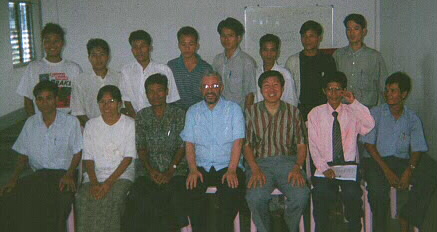
Monday, December 13
Time For Another Trip
It is hard to believe it has been nearly a year since my last trip to Myanmar, but time does get away from us sometimes. It has been a profitable year. The New Life Orphanage continues and with more support could easily double the number of orphans we presently have. At the present we are supporting 75 orphans, including food, lodging, and education. As the orphans become older they also learn trades (generally sewing, farming, and carpentry). Our biggest "structural" need at present is for a carpentry shop. We have the space to build it -- it would go on about 1/3 of the 7.5 acres that we are presently using for rice. But we need the funds (yes, that is a hint).
The Ticket Has Been Purchased
So, the plan is presently for me to leave Dallas-Ft. Worth on February 1st. The trip this time takes me through Los Angeles, Osaka, Bangkok, and then to Yangon (Rangoon). I will arrive in Yangon, DV, mid-morning on the third. We "lose" a half day when we cross the Int'l dateline, so it doesn't really take 48 hours to get there. It only takes 33-36 hours on the trip -- but about 8 hours of that is a layover in Bangkok.
And For Those Who Have Prayed With Us In The Past...
The next step is that of receiving an entry visa from the government (embassy) of the Union of Myanmar. I have been there seven times now -- this is my eighth trip. So the immediate temptation is to think of the visa as a "given." But the fact is, "man proposes, but God disposes." We have received the visas in the past, it is true. But we have also undertaken to pray with hundreds of people that those visas would be granted. So God has been pleased to go before us in the past, just as he went before the Israelites in the desert. But we dare not think we should quit praying for his will to be accomplished in us and through us.
Actually, Myanmar visas are very hard to get. I know of others who have gone there and been turned down for subsequent trips, so it is not "automatic." Please do be in prayer -- remember this as you pray for missions. And please pass along this request to others in your congregation's membership and leadership as well.
The Psalter Is Ready To Go
The digital file has been brought up to date. We simply need to compile all three portions into a single document for the "final review." This will be the first complete Psalter available for singing in any of the languages of Myanmar. There are over 100 distinct languages and dialects used among the tribes of Myanmar, and we have been helping in getting Psalters for two of them. Most of the work being done on the Burmese language Psalter is being done by the Evangelical Presbyterian Church of Myanmar (EPCM) and the Protestant Reformed Churches of Myanmar (PRCM). We are happy to be of some help to them. But most of our work has been done on the Falam language Psalter. That is the "family" language of most of the Christian Chin in Myanmar.
And We Hope To Do Some Teaching
We will be getting to Yangon just at the end of the school year and hope to teach at the Reformed Bible Institute (RBI) under the presidency of U Thang Bwee. In two weeks, it will be difficult to teach much in depth, but I will have the students for six hours per day and six days per week. So the lecture time will actually be comparable to 3 or 4 semester hours. Please pray for understanding. The men I will be training will be carrying the gospel to the villages of Myanmar for the coming generation.
More later as the day of departure approaches.
It is hard to believe it has been nearly a year since my last trip to Myanmar, but time does get away from us sometimes. It has been a profitable year. The New Life Orphanage continues and with more support could easily double the number of orphans we presently have. At the present we are supporting 75 orphans, including food, lodging, and education. As the orphans become older they also learn trades (generally sewing, farming, and carpentry). Our biggest "structural" need at present is for a carpentry shop. We have the space to build it -- it would go on about 1/3 of the 7.5 acres that we are presently using for rice. But we need the funds (yes, that is a hint).
The Ticket Has Been Purchased
So, the plan is presently for me to leave Dallas-Ft. Worth on February 1st. The trip this time takes me through Los Angeles, Osaka, Bangkok, and then to Yangon (Rangoon). I will arrive in Yangon, DV, mid-morning on the third. We "lose" a half day when we cross the Int'l dateline, so it doesn't really take 48 hours to get there. It only takes 33-36 hours on the trip -- but about 8 hours of that is a layover in Bangkok.
And For Those Who Have Prayed With Us In The Past...
The next step is that of receiving an entry visa from the government (embassy) of the Union of Myanmar. I have been there seven times now -- this is my eighth trip. So the immediate temptation is to think of the visa as a "given." But the fact is, "man proposes, but God disposes." We have received the visas in the past, it is true. But we have also undertaken to pray with hundreds of people that those visas would be granted. So God has been pleased to go before us in the past, just as he went before the Israelites in the desert. But we dare not think we should quit praying for his will to be accomplished in us and through us.
Actually, Myanmar visas are very hard to get. I know of others who have gone there and been turned down for subsequent trips, so it is not "automatic." Please do be in prayer -- remember this as you pray for missions. And please pass along this request to others in your congregation's membership and leadership as well.
The Psalter Is Ready To Go
The digital file has been brought up to date. We simply need to compile all three portions into a single document for the "final review." This will be the first complete Psalter available for singing in any of the languages of Myanmar. There are over 100 distinct languages and dialects used among the tribes of Myanmar, and we have been helping in getting Psalters for two of them. Most of the work being done on the Burmese language Psalter is being done by the Evangelical Presbyterian Church of Myanmar (EPCM) and the Protestant Reformed Churches of Myanmar (PRCM). We are happy to be of some help to them. But most of our work has been done on the Falam language Psalter. That is the "family" language of most of the Christian Chin in Myanmar.
And We Hope To Do Some Teaching
We will be getting to Yangon just at the end of the school year and hope to teach at the Reformed Bible Institute (RBI) under the presidency of U Thang Bwee. In two weeks, it will be difficult to teach much in depth, but I will have the students for six hours per day and six days per week. So the lecture time will actually be comparable to 3 or 4 semester hours. Please pray for understanding. The men I will be training will be carrying the gospel to the villages of Myanmar for the coming generation.
More later as the day of departure approaches.
Subscribe to:
Posts (Atom)